Global Condemnation of US Sanctions on International Criminal Court
Translated & summarized from Ynet by baba
Dozens of countries and international bodies, including the European Union and the UN, condemned the U.S. decision to impose sanctions on the International Criminal Court (ICC). The sanctions, which include asset freezes and transaction bans, are set to take effect after a 180-day waiver period, during which negotiations are possible. The ICC rejected the measures as an attack on the rule of law, while the Palestinian Authority praised a jurist who previously accused Israel of genocide in Gaza.
The story in 5 lines · by baba
- Multiple countries and international bodies condemned U.S. sanctions against the International Criminal Court (ICC).
- The ICC rejected the sanctions as an attack on the rule of law and international justice.
- The sanctions include asset freezes and transaction bans, with a 180-day waiver for negotiations.
- The U.S. indicated a willingness for diplomatic solutions to address its concerns.
- The Palestinian Authority praised a jurist who accused Israel of genocide in Gaza.
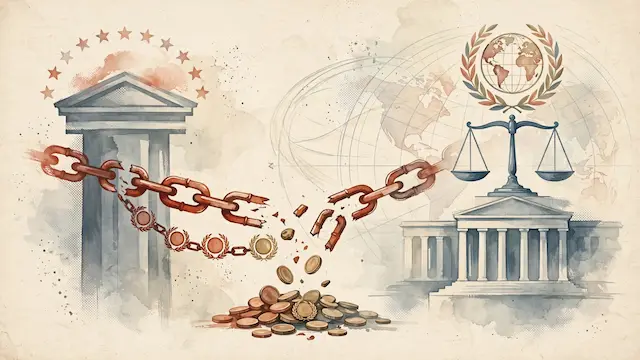
Numerous countries worldwide condemned the United States' decision to impose sanctions on the International Criminal Court (ICC) in The Hague. Beyond expressing concern, these nations affirmed their full support for the court and pledged to ensure its continued operation despite Washington's measures. The ICC itself "strongly rejected the sanctions" and called on member states to guarantee its functionality, stating the sanctions are an "attempt to disrupt the course of justice" and an "attack on the rule of law and the very foundations of the international legal order."
The court reiterated its commitment to fulfilling its mandate of prosecuting individuals for war crimes, crimes against humanity, genocide, and aggression when national jurisdictions are unable or unwilling to do so. It emphasized that its fate now rests with the states that created it, framing the situation as a defense of the international order based on the rule of law, adding, "History will judge this moment."
The U.S. sanctions, which stem from the Rome Statute, will not take immediate effect. They include freezing U.S.-based assets of the ICC and prohibiting transactions involving American entities or occurring within U.S. territory related to these frozen assets. However, Senator Marco Rubio, who had vehemently criticized the court, indicated a possibility for negotiation by introducing a 180-day waiver period for ongoing activities, stating, "We still hope for a diplomatic solution. We designed this step to give member states an opportunity to negotiate and present a solution that addresses our concerns. If these efforts do not bear fruit, we will continue to adjust our steps accordingly."
Joint statements of condemnation were issued by Canada, Denmark, Germany, France, Italy, Japan, the Netherlands, and the United Kingdom. Their foreign ministers reaffirmed their "unwavering support for the court," warning that the sanctions "would have a significant impact on the work of the court, its dedicated staff, and their families." The European Union also expressed regret over the U.S. announcement, pledging to work closely with the court to ensure its effective operation and stating readiness to take necessary steps to preserve its independence.
Belgium's Foreign Minister Maxime Prévot "sharply condemned the new U.S. sanctions" and urged the EU to invoke a special blocking statute to prevent the enforcement of U.S. laws within the EU, which would allow continued financial and legal support for the ICC. UN Secretary-General António Guterres expressed "deep concern about the expected repercussions," particularly on the court's ability to fulfill its duties, and called the decision a "severe blow to our collective effort to advance international criminal justice." He urged all nations to uphold their international legal obligations and support the court's independence.
Meanwhile, the Palestinian Authority welcomed the decision to award the Nobel Peace Prize to South African jurist Navi Pillay, who previously authored a report accusing Israel of genocide in Gaza. The Palestinian Foreign Ministry praised Pillay's integrity and courage in defending the oppressed, including in Palestine.
Mentioned
The same event, reported separately by each outlet. Open a few to compare what different newsrooms emphasize — and what they leave out.
Left 1Centre 6Right 2Arab 3Other 6




















Not the same event — other stories that share this one’s people, places, or theme: background, reactions, and follow-ups.