US Imposes Sanctions on International Criminal Court, Threatens Operations
Translated & summarized from Al-Shams by baba
The United States has imposed sanctions on the International Criminal Court (ICC) and its operations, citing its investigations into U.S. and Israeli actions. Secretary of State Marco Rubio stated the U.S. will block transactions and cut off resources, vowing not to allow the prosecution of American citizens. The ICC condemned the sanctions as an attack on international law and urged member states to defend it. The U.S. sanctions follow previous measures against ICC officials and are part of an ongoing dispute over the court's jurisdiction.
The story in 6 lines · by baba
- The U.S. imposed sanctions on the International Criminal Court, targeting its operations and resources.
- Secretary of State Marco Rubio stated the U.S. will block transactions and prevent the prosecution of American citizens.
- The ICC condemned the sanctions as an attack on international law and urged member states to defend it.
- The sanctions are a response to the ICC's investigations into U.S. and Israeli actions, including arrest warrants for Israeli officials.
- The U.S. previously sanctioned ICC judges and prosecutors over its judicial proceedings.
- The ICC handles serious international crimes, including war crimes and crimes against humanity.
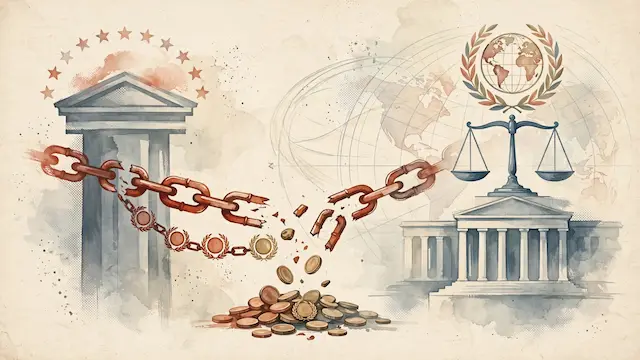
The United States announced on Friday that it is imposing sanctions on the International Criminal Court (ICC) as an institution, escalating its actions against the court over its investigations and judicial proceedings concerning the U.S. and Israel. U.S. Secretary of State Marco Rubio stated that the administration of President Donald Trump will block transactions with the ICC, cut off its resources, and undermine its ability to operate, asserting that Washington will not permit the court to prosecute American citizens. These new sanctions go beyond previous U.S. measures against ICC judges and prosecutors, targeting the institution itself and potentially impacting companies providing financial and technical services to it. U.S. entities have been given up to 180 days to end certain dealings with the court, with exceptions and licenses allowing specific activities to continue during a transitional period. The U.S. administration justified its decision by rejecting the court's jurisdiction in cases involving American citizens and objecting to its proceedings against Israeli officials, including Prime Minister Benjamin Netanyahu and former Defense Minister Yoav Gallant, who were issued arrest warrants in 2024 for alleged war crimes and crimes against humanity in Gaza. The ICC rejected the sanctions, calling them an assault on the rule of law and the foundations of the international legal system. The court warned that targeting it aims to disrupt its operations and intimidate its staff and collaborators, urging its 125 member states to act in its defense. The ICC emphasized that its future is linked to the stance of its founding states and that the U.S. actions threaten not just a specific institution but the international system based on the rule of law. Deputy Prosecutor Nezahat Shamim Khan stated that the sanctions aim to undermine the rule of law and the work of an independent judicial institution, affirming that the court will continue its investigations and prosecutions. This move is part of a continuous U.S. campaign against the ICC, following previous sanctions on judges and prosecutors over judicial actions not accepted by the U.S. administration. Previous U.S. sanctions also targeted Palestinian human rights groups and UN Special Rapporteur Francesca Albanese. The ICC handles the most serious international crimes, including war crimes, crimes against humanity, genocide, and aggression. Although the U.S. and Israel are not parties to the Rome Statute, the court asserts jurisdiction over alleged crimes committed on the territory of member states. The new sanctions have raised concerns about their impact on Washington's relations with its European allies, many of whom support the court, as attention turns to potential actions by member states to protect its work and ensure the continuation of its investigations and prosecutions.
Mentioned
The same event, reported separately by each outlet. Open a few to compare what different newsrooms emphasize — and what they leave out.
Left 1Centre 6Right 2Arab 3Other 6