
US Sanctions ICC After Peace Prize Award to Judge
Translated & summarized from Arab48 by baba
The United States imposed sanctions on the International Criminal Court (ICC) on Friday, citing a threat to American sovereignty, hours after former ICC judge Navi Pillay was awarded the Nobel Peace Prize. The ICC condemned the sanctions as an "assault on the rule of law" and urged its 125 member states to support it. Israeli Prime Minister Benjamin Netanyahu praised the U.S. action, calling the ICC a political body. The European Union expressed regret and readiness to support the court.
The story in 6 lines · by baba
- The U.S. imposed sanctions on the ICC on Friday, vowing to cripple its operations.
- Washington cited defending American sovereignty and citizens as the reason for the sanctions.
- The ICC condemned the sanctions as an "assault on the rule of law" and asked member states for support.
- Former ICC judge Navi Pillay, recognized for her work at the court, received the Nobel Peace Prize.
- Israeli Prime Minister Benjamin Netanyahu praised the U.S. sanctions against the ICC.
- The European Union called the sanctions "extremely regrettable" and pledged support for the ICC.
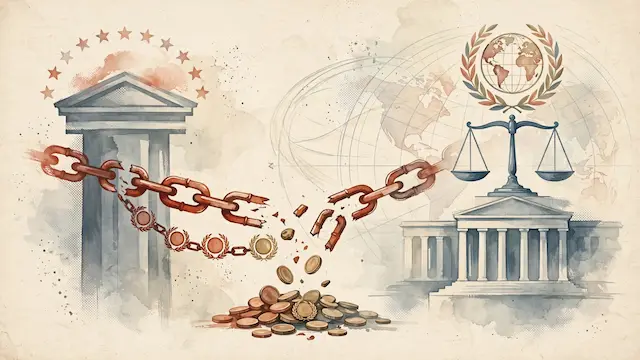
The United States imposed sanctions on the International Criminal Court (ICC) on Friday, vowing to cripple its operations, hours after the Nobel Peace Prize committee awarded its prize to former ICC judge Navi Pillay. Washington justified the sanctions by stating its desire to "defend American sovereignty and its citizens against the threat posed by the ICC," according to a statement from the State Department. Senator Marco Rubio declared, "Either the ICC ends its threats, or we will end the court." The ICC condemned the U.S. sanctions as an "assault on the rule of law." In a statement, the court argued that the sanctions represent "an assault on the rule of law and the fundamental pillars of the international legal system, touching upon the simple principle that no one is above the law." The court believes these measures aim to intimidate its staff and obstruct its activities, asserting that it will not be deterred from its path. ICC President Tomoko Akane stated, "The court will continue to fully exercise its mandate, with complete independence and impartiality, based solely on law and evidence, for the countless victims of serious crimes." The court also called on its 125 member states to stand with it, emphasizing that its fate "now also depends on the states that created it." The court questioned how future generations, especially victims of mass atrocities, would view the response when an institution established to protect them was targeted. The U.S. sanctions followed shortly after South African former judge Navi Pillay received the Nobel Peace Prize, largely in recognition of her work at the ICC. Israeli Prime Minister Benjamin Netanyahu praised the U.S. sanctions, noting that the ICC had previously issued an arrest warrant against him related to the war in Gaza. A post from Netanyahu's office on X stated, "The ICC is not a court, but a political body that poses an existential threat to law-abiding democracies around the world and to the principle of national sovereignty." The European Union called the U.S. sanctions "extremely regrettable" and affirmed its readiness to take necessary measures to enable the court to perform its work. The European Commission stated that the EU would work closely with the ICC to ensure its continued effective operation, expressing hope that the six-month delay before the sanctions take effect would provide room for dialogue.
Mentioned
The same event, reported separately by each outlet. Open a few to compare what different newsrooms emphasize — and what they leave out.
Left 1Centre 6Right 1Arab 2Other 6


















Not the same event — other stories that share this one’s people, places, or theme: background, reactions, and follow-ups.