US Imposes Harsh Sanctions on International Criminal Court
Translated & summarized from Vesty by baba
The United States imposed sanctions on the International Criminal Court (ICC) on October 9, citing its actions against Americans and allies. The move, which aims to cut off funding and paralyze the court's operations, was condemned by the ICC and the European Union. Israeli Prime Minister Benjamin Netanyahu also criticized the decision and the Nobel Peace Prize awarded to former ICC judge Navi Pillay, whom he accused of spreading "blood libels" against Israel.
The story in 6 lines · by baba
- The U.S. imposed sanctions on the International Criminal Court (ICC) on October 9.
- The sanctions are intended to cut off the ICC's funding and paralyze its operations.
- The ICC condemned the U.S. sanctions as an attack on the rule of law.
- The European Union also condemned the U.S. decision and pledged support for the ICC.
- Israeli Prime Minister Benjamin Netanyahu criticized the ICC and Navi Pillay, who received the Nobel Peace Prize.
- Netanyahu accused Pillay of spreading "blood libels" against Israel and legitimizing the ICC prosecutor.
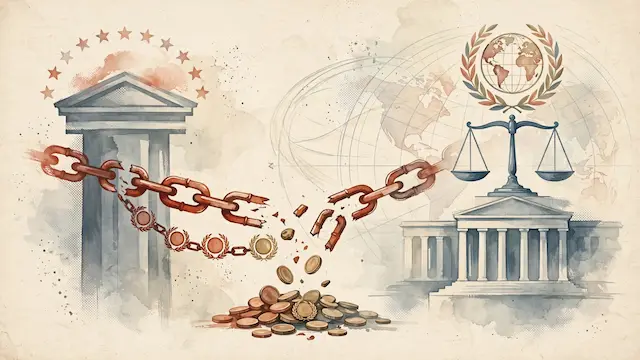
The United States administration announced on Friday, October 9, that it has imposed sanctions on the International Criminal Court (ICC) in The Hague, a move previously threatened by the U.S. The decision followed by mere hours the awarding of the Nobel Peace Prize to Navi Pillay, a former ICC judge who led a commission that characterized Israel's actions in Gaza as "genocide."
The ICC sharply criticized the U.S. decision, stating it was an "attempt to impede the Court from doing what it was created to do" and an "attack on the rule of law and the foundations of the international legal order." The Court emphasized that its fate rests with the states that established it and that the action concerns not just the institution but the preservation of an international order based on the rule of law.
This U.S. action is expected to trigger a diplomatic rift with European allies. The Trump administration has maintained a hostile stance toward the ICC, previously sanctioning its prosecutors and judges and initiating a campaign to isolate and weaken it. However, the current sanctions are considered more radical, potentially penalizing companies that provide services to the Court.
U.S. Secretary of State Marco Rubio stated that "President Trump will never allow the International Criminal Court to prosecute Americans." He declared that the U.S. would "prohibit any transactions with this out-of-control court, cut off its funding sources, and paralyze its ability to act." Rubio warned, "Either the ICC ceases its threats, or we will end its existence."
Washington has long expressed outrage over ICC arrest warrants for Israeli Prime Minister Benjamin Netanyahu and former Defense Minister Yoav Gallant, as well as a past investigation into U.S. military actions in Afghanistan, which was later dropped. The document detailing the new sanctions stated that the U.S. has sanctioned 17 individuals under Presidential Executive Order 14203 to protect its sovereignty and citizens from the ICC's perceived threat.
Rubio explained that the U.S. had delayed sanctions hoping the Court and its state parties would address Washington's concerns, but this did not happen. He urged allies, many of whom rely on U.S. military support, to restrain the ICC.
The European Union condemned the U.S. sanctions, with the European Commission calling the decision "highly regrettable" and pledging to work with the Court to ensure its continued effective operation.
Separately, Israeli Prime Minister Benjamin Netanyahu vehemently criticized the Nobel Committee's decision to award the prize to Navi Pillay, calling her a "racist" who built her career on "blood libels" against Israel. Netanyahu accused Pillay of legitimizing ICC Prosecutor Karim Khan, whom he alleged was facing accusations of rape and sexual assault, by using her claims against Israel. Netanyahu asserted that Pillay provided false statements, which Khan weaponized, leading to what he described as a perversion of justice and the "demonization of Jews."
Mentioned
The same event, reported separately by each outlet. Open a few to compare what different newsrooms emphasize — and what they leave out.
Left 1Centre 5Right 1Arab 2Other 6