US Imposes Sanctions on International Criminal Court
Translated & summarized from Channel 9 by baba
The Trump administration has imposed broad sanctions on the International Criminal Court, prohibiting all transactions with the institution and potentially impacting service providers. This action follows long-standing U.S. opposition to ICC investigations involving American citizens and Israeli officials, including potential warrants for Prime Minister Benjamin Netanyahu. The ICC's Deputy Prosecutor condemned the sanctions but vowed to continue its work. The announcement coincided with a former ICC judge receiving the Nobel Peace Prize.
The story in 5 lines · by baba
- The U.S. has imposed sanctions on the International Criminal Court, banning all transactions with the institution.
- Washington's sanctions aim to restrict the ICC's resources and could affect companies providing services to it.
- The U.S. opposes ICC investigations into American citizens and Israeli leaders, including potential warrants for Benjamin Netanyahu.
- The ICC's Deputy Prosecutor condemned the sanctions but stated investigations will continue.
- The sanctions were announced on the same day a former ICC judge received the Nobel Peace Prize.
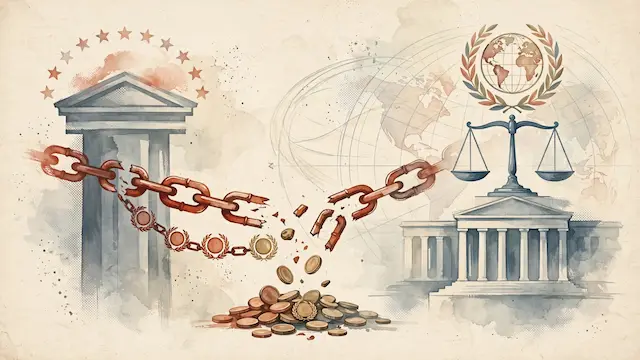
The administration of U.S. President Donald Trump has imposed sanctions on the International Criminal Court (ICC), prohibiting transactions with the international judicial body. This move by Washington aims to restrict the court's resources and could impact companies providing services to it. U.S. That is why today the United States is imposing sanctions on the International Criminal Court. We will ban transactions with this court, depriving it of resources and undermining its ability to function."
The new measures are broader than previous sanctions targeting individual ICC judges and prosecutors. The restrictions now potentially affect companies directly serving the court, including banking, insurance, and software providers. The U.S. administration has structured the sanctions mechanism to allow the court and states parties to the Rome Statute to consider Washington's demands, with the U.S. Treasury expected to issue special licenses for certain operations. Details of the new restrictions have not yet been disclosed.
Washington has long opposed the ICC's activities concerning American citizens and Israeli leaders, specifically objecting to arrest warrants for Israeli Prime Minister Benjamin Netanyahu and former Defense Minister Yoav Gallant. The U.S. also opposed an investigation into U.S. military actions in Afghanistan, which was later dropped.
The ICC, established in 2002 to prosecute individuals accused of war crimes, crimes against humanity, and genocide, has 125 member states. The U.S. is not a member and does not recognize the court's jurisdiction over its citizens. Deputy Prosecutor Nazhat Shameem Khan condemned the sanctions as an attempt to undermine international rule of law and the work of an independent judicial institution, asserting that investigations and proceedings will continue.
Coincidentally, the sanctions were announced on the same day that South African lawyer Navi Pillay, a former judge at the ICC's appeals chamber, received the Nobel Peace Prize. The Nobel Committee cited her contributions to international criminal justice and highlighted the political pressure faced by international law and judicial institutions.
Mentioned
The same event, reported separately by each outlet. Open a few to compare what different newsrooms emphasize — and what they leave out.
Left 1Centre 5Right 1Arab 2Other 6