
US Imposes Sanctions on International Criminal Court
Translated & summarized from Panet by baba
The U.S. administration has imposed sanctions on the International Criminal Court (ICC) following its opposition to ICC investigations involving Americans and Israelis. The ICC condemned the move as an assault on the rule of law, while U.S. Secretary of State Marco Rubio stated the sanctions aim to prevent the prosecution of Americans. The sanctions, which include a six-month grace period, are intended to pressure the court to address U.S. concerns. European allies have expressed concern, with the EU suggesting dialogue and Belgium calling for protective measures.
The story in 6 lines · by baba
- The U.S. imposed sanctions on the International Criminal Court, citing its opposition to investigations involving Americans.
- The ICC condemned the U.S. sanctions as an assault on the rule of law and international legal foundations.
- Secretary of State Marco Rubio stated the U.S. will not allow the ICC to prosecute Americans.
- Washington is angered by ICC arrest warrants for Israeli officials, including Prime Minister Benjamin Netanyahu.
- The sanctions include a six-month grace period and some exceptions, with potential modification based on U.S. concerns.
- The Nobel Committee highlighted political attacks on international law in its award to former ICC judge Navi Pillay.
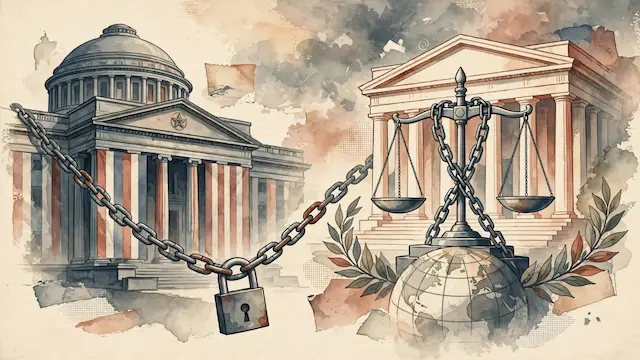
The administration of U.S. President Donald Trump imposed sanctions on the International Criminal Court (ICC) on Friday, hours after a former judge of the court won the Nobel Peace Prize. This move places Washington on a diplomatic collision course with its European allies.
The ICC condemned the sanctions, calling them an "assault on the rule of law and the foundations of the international legal system." The court urged its 125 member states to take action to defend it, stating, "The court cannot stand alone. Its fate now also lies in the hands of the states that created it... It is not just about defending one institution, but about protecting the international order based on the rule of law. History will judge this moment."
The Trump administration has long opposed the ICC, established in 2002 to prosecute perpetrators of war crimes, crimes against humanity, and genocide. Previous U.S. sanctions targeted ICC prosecutors and judges. The latest measures, however, go further by potentially penalizing companies providing services to the court itself, representing an unprecedented attack on an institution founded by international treaty. The U.S. initially signed the Rome Statute that created the court but never ratified it.
Secretary of State Marco Rubio stated before the official announcement that President Trump would "never allow the ICC to prosecute Americans." He added, "That is why the United States is today imposing sanctions on the ICC. We will block transactions with this rogue court, cut off its resources, and cripple its ability to operate." The U.S. Treasury Department announced the sanctions with an initial six-month grace period and some exceptions for transactions related to communications, software, pension payments, and dealings with detainees. Rubio indicated the sanctions were designed to give the court and its member states an opportunity to address U.S. concerns, and would be modified if those demands were not met.
Washington has been angered by arrest warrants issued by the ICC for two Israeli officials, including Prime Minister Benjamin Netanyahu, and by a prior investigation into the actions of U.S. soldiers in Afghanistan. The court stated it had delayed prioritizing that investigation. Rubio also referenced external calls for the ICC to prosecute U.S. military personnel, border patrol agents, and elected leaders, though ICC officials have not pursued such prosecutions.
ICC Deputy Prosecutor General Nezahat Shanim Khan told Reuters that the sanctions aim to undermine international rule of law and the work of an independent judicial institution, but vowed that the court's work would continue. EU foreign policy chief Kaja Kallas suggested the six-month period offered a chance for dialogue, while the Belgian Foreign Minister called for activating an EU protection law. The ICC has publicly indicted over 70 individuals, including world leaders and figures in global conflicts, such as Russian President Vladimir Putin, former Sudanese President Omar al-Bashir, and Muammar Gaddafi. Charges against Kenyan President William Ruto and former Kenyan President Uhuru Kenyatta were withdrawn.
The Nobel Committee noted the political attacks on international law in its award, recognizing former ICC judge Navi Pillay for her work in international criminal justice. The committee stated its aim was to "send a reminder" during a time when international law judges and institutions face political attacks, emphasizing that a system holding war criminals accountable is essential for peace.
U.S. sanctions typically prevent U.S.-based companies from dealing with sanctioned entities, forcing banks to close accounts and insurers to end coverage. While the Trump administration previously imposed targeted sanctions on specific ICC officials, President Joe Biden rescinded them. Washington announced the new sanctions shortly after Trump's return to the presidency in January 2025. ICC officials have been preparing for potential sanctions for months, switching computer software and making new arrangements for banking and health services.
Mentioned
The same event, reported separately by each outlet. Open a few to compare what different newsrooms emphasize — and what they leave out.
Haredi 1Arab 1Other 1


Not the same event — other stories that share this one’s people, places, or theme: background, reactions, and follow-ups.
