Satellite Images Show Accelerated Construction at Suspected Iranian Nuclear Site
Translated & summarized from Arab48 by baba
Satellite images analyzed by a US think tank show accelerated construction in 2026 at a fortified Iranian mountain site suspected of housing an undeclared uranium enrichment facility. The site was previously threatened with a US strike, and Iran has not granted IAEA access.
The story in 6 lines · by baba
- Satellite images reveal accelerated construction at a fortified Iranian site near Natanz.
- The site is suspected by Western intelligence of being an undeclared uranium enrichment facility.
- Construction activity in 2026 has surpassed all previous recorded levels at the site.
- Experts cannot confirm or deny reports of centrifuge transfers to the location.
- The facility's deep, fortified nature makes it difficult to destroy.
- Iran has not granted IAEA access to the site despite requests.
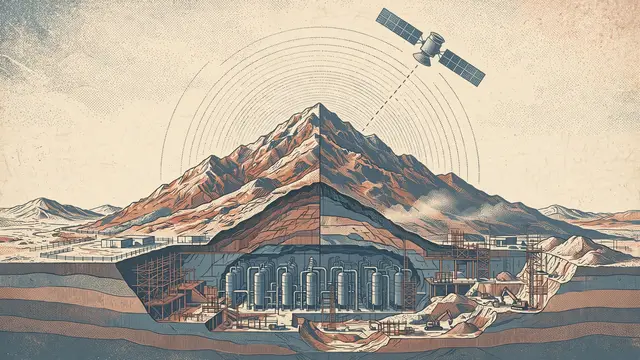
Satellite imagery analyzed by a US research center reveals a significant acceleration in construction activities at a fortified Iranian site deep within Mount Kolan, near Natanz, during 2026. Western intelligence agencies suspect Tehran is developing an undeclared uranium enrichment facility at this location. The latest images, taken on August 9, show intensified work on fortifying tunnel entrances and the internal road network.
Experts from the Center for Strategic and International Studies (CSIS), a Washington-based think tank, analyzed satellite photos spanning six years. They concluded that the activity on the roads within Mount Kolan in 2026 surpasses any previously recorded levels since the site's inception. The experts noted a clear increase in construction, including the reinforcement and elevation of tunnel entrances, paving of internal roads, enhancement of areas around the entrances, and the clearing of excavation debris.
However, the CSIS experts stated they could neither confirm nor deny Israeli intelligence reports suggesting that Iran has transferred centrifuges to the site. This location was previously threatened with a strike by then-US President Donald Trump in July, as part of Washington's stated aim to dismantle Iran's nuclear program. Trump's threat has not yet been acted upon.
The International Atomic Energy Agency (IAEA) has requested information from Tehran regarding Mount Kolan and access to the site, but according to reports cited by CSIS, Iran has not complied. The experts highlighted the difficulty of destroying the fortified facility, which is embedded within a granite mass at a considerable depth, even with the most powerful non-nuclear US munitions.
The ongoing conflict between the United States and Iran has entered its seventh month. On Wednesday, Tehran launched new attacks on US targets in the region, reportedly in retaliation for US strikes on Iranian oil tankers, indicating a further escalation of military tensions.
Mentioned
The same event, reported separately by each outlet. Open a few to compare what different newsrooms emphasize — and what they leave out.
Left 2Centre 4Right 2Haredi 1Arab 1Other 3