Satellite Images Reveal Major Construction Surge at Suspected Iranian Nuclear Site
Translated & summarized from N12 by baba
Satellite images reveal a significant increase in construction at Iran's Mount Makush site, suspected to be part of its nuclear program. The US military is reportedly developing new weapons to potentially strike the deeply buried facility, with former President Trump having previously threatened an attack.
The story in 5 lines · by baba
- Satellite images show a major construction surge at Iran's Mount Makush nuclear site.
- The site is suspected of being used to revive Iran's nuclear weapons program.
- The US military is developing new weapons to target deeply buried underground facilities.
- Former President Trump has threatened potential US military action against the site.
- The facility's deep underground location makes it extremely difficult to attack.
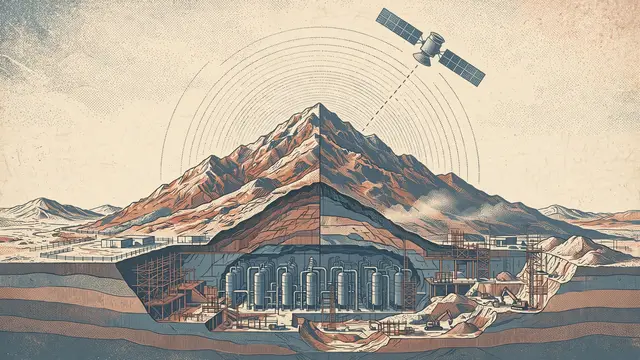
New satellite imagery indicates a significant increase in construction activity at Iran's "Mount Makush" site, believed to be linked to its nuclear program. Analysis of images taken over the past six years, conducted by the Center for Strategic and International Studies (CSIS), shows a marked rise in construction over the last year. The site, located approximately 225 kilometers south of Tehran and near the Natanz nuclear facility, has become a focal point for intelligence agencies concerned that Iran is secretly reviving its nuclear weapons program.
According to the report, construction at the underground facility has transitioned from "active excavation" to "internal construction and external reinforcement." In 2026, "more road activity than ever before" was observed at Mount Makush, along with tunnel entrance reinforcement, internal road paving, and clearing of excavated earth. Despite this activity, analysts suggest the site may not yet be capable of uranium enrichment, if that is its intended purpose.
US intelligence agencies are reportedly concerned that Iran may be moving centrifuges to the site for uranium enrichment or transferring some of its enriched uranium stockpile there. Former US President Donald Trump has also stated that the US might attack Mount Makush and that plans are ready. However, the site is considered extremely difficult to attack due to its location deep underground beneath a granite mountain, potentially beyond the capabilities of current US weaponry.
The US military is reportedly accelerating preparations to develop weapons capable of striking such deeply buried facilities. This includes research into next-generation bunker-buster munitions intended to penetrate deeper than existing weapons. A recent Pentagon agency contract for repairs to a unique underground test facility in New Mexico is believed to be related to testing new weapons designed to counter Mount Makush, with test plans reportedly linked to a potential conflict with Iran.
Mentioned
The same event, reported separately by each outlet. Open a few to compare what different newsrooms emphasize — and what they leave out.
Left 2Centre 4Right 2Haredi 1Arab 1Other 3