
European Nations Impose Trade Sanctions on Israeli Settlements, Threatening Broader Exports
Translated & summarized from Calcalist by baba
Several European countries, led by the UK, are implementing trade sanctions and import bans on goods originating from Israeli settlements in the West Bank and the Golan Heights. Israeli industry leaders fear these measures will escalate into a broader boycott of all Israeli products, significantly impacting the nation's export economy.
The story in 5 lines · by baba
- UK and 11 European nations impose sanctions on West Bank settlements.
- Measures include bans on purchasing goods and services from settlements.
- Israel fears sanctions will lead to a widespread boycott of all its exports.
- Netherlands and Ireland have enacted similar import restrictions.
- Israel is seeking alternative markets for its affected products.
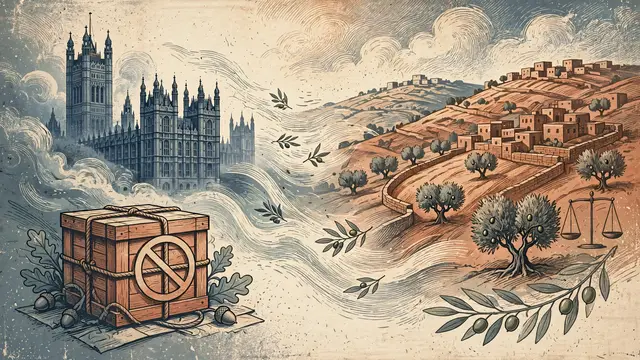
Several European countries are intensifying efforts to restrict trade with companies producing goods in the West Bank, East Jerusalem, and the Golan Heights, employing legislation, government orders, and import controls. The United Kingdom announced new sanctions on West Bank settlements, prohibiting the purchase of goods and services from these areas. British Foreign Secretary Ed Miliband stated the move aims to advance the two-state solution and support Palestinians. Eleven other nations, including Canada, Denmark, Finland, France, Iceland, Ireland, Norway, Poland, Portugal, and Spain, have joined the UK in a joint declaration supporting the two-state solution and condemning Israeli actions in the territories, pledging to back trade restrictions on settlement goods.
These measures follow similar actions in other European nations. The Netherlands has enacted a decree, effective September 22, that bans imports from settlements and the Golan Heights, and also prohibits the transit of goods from Israel through the Netherlands. Ireland's president signed a law on July 23, banning imports from the West Bank and East Jerusalem, though it has not yet taken effect. Belgium is advancing a similar law that would exempt Palestinian goods, and Canada and France are also considering joining these initiatives.
Israeli industrialists express significant concern over these trade restrictions, fearing a broader impact on all Israeli exports. Lior Levi, CEO of Biscool and chairman of the Food and Cosmetics Industries Association, stated that European buyers are increasingly unwilling to differentiate between products from settlements and those from within Israel, leading to a de facto boycott of all Israeli goods. He warned that Western Europe, a primary export market for Israel, could become inaccessible for Israeli products, describing the situation as a large-scale, stressful event and a potential catastrophe for consumer goods exports.
Officials at Israel's Ministry of Economy acknowledge the risk of a widespread chilling effect on all Israeli exports, beyond the direct impact on approximately 20 exporters of fresh produce, dates, salads, and irrigation products. Roey Fisher, head of the Foreign Trade Administration at the ministry, noted that while the UK's declaration initially targets about 30 products, it includes strong language regarding Israeli policy, such as accusations of ethnic cleansing and illegal occupation, suggesting potential expansion. The ministry is working to identify alternative markets, such as India, the UAE, Chile, and Argentina, and is offering financial assistance to affected exporters.
Fisher also highlighted that Israeli exporters often struggle to explain the precise origin of their goods to foreign buyers, leading to a general reluctance to engage with Israeli products. He pointed out that while 2025 was a record year for Israeli exports despite these challenges, the combined pressure of European boycotts and currency fluctuations poses a significant defensive challenge for the Israeli economy.
Mentioned
The same event, reported separately by each outlet. Open a few to compare what different newsrooms emphasize — and what they leave out.
Left 2Centre 7Right 5Haredi 3Arab 3Other 9

































Not the same event — other stories that share this one’s people, places, or theme: background, reactions, and follow-ups.