
Israel Fears Wider Impact of Settlement Product Sanctions
Translated & summarized from Arab48 by baba
Israel is concerned that upcoming British sanctions on settlement products could escalate into broader restrictions affecting all its exports. While direct economic impact is deemed limited, officials fear a dangerous precedent and potential negative perception of all Israeli goods.
The story in 6 lines · by baba
- Israel fears UK sanctions on settlement goods could broaden to all exports.
- Direct economic impact of UK sanctions is expected to be limited.
- Other nations may follow the UK's lead, creating a cumulative effect.
- Israeli farmers, especially date producers, face direct challenges.
- Ministry of Economy has a plan to find alternative markets.
- Concerns exist about importers avoiding all Israeli products.
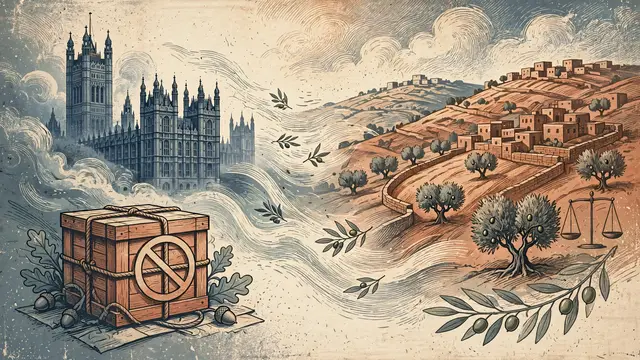
Israel's economic circles are expressing concern over the potential for a British ban on settlement products to expand and affect broader trade with Israel. While the direct financial impact of the upcoming British sanctions on Israeli settlement goods is expected to be limited, the primary worry is that this move could set a precedent, leading other nations to impose similar or wider restrictions.
These fears come as several European countries, including Canada, Denmark, Finland, France, Iceland, Ireland, Norway, Poland, Portugal, Spain, and Sweden, have announced intentions to take similar measures or support broader restrictions. Roee Fisher, Director of Foreign Trade at Israel's Economy Ministry, stated that exports from occupied territories, including the West Bank, East Jerusalem, and the Golan Heights, amount to only about $34 million, a small fraction of Israel's total exports of $44 billion. However, Fisher noted that fresh agricultural products, particularly dates from the Jordan Valley, valued at around $45 million, could be directly affected, posing a "dramatic" challenge for Israeli farmers in the sector.
The Israeli Economy Ministry has prepared a plan to address potential boycotts, including direct outreach to affected exporters, a program to find alternative markets, and grants of up to 200,000 shekels to help open new markets. Fisher highlighted that the greater concern is the "negative impact" that could extend to all Israeli exports, as British importers might not distinguish between settlement products and those from within Israel, especially given the political discourse surrounding the West Bank. He warned that some importers might avoid dealing with Israel altogether to mitigate risks.
Abraham Novogrodsky, head of the Union of Industrialists in Israel, urged against exaggerating the direct damage from the British move alone, noting that trade volume with the UK is not substantial enough to cause widespread economic harm. He identified the real danger as other countries joining the sanctions, leading to a cumulative effect. Novogrodsky also expressed concern about the potential for the boycott wave to spread from settlement products to Israeli industry generally. He claimed that approximately 18,000 Palestinian workers in settlements in the northern West Bank could be negatively impacted by broader measures.
Novogrodsky called for diplomatic action to prevent the expansion of these measures and for the government to provide protective tools for Israeli companies. He suggested diversifying export markets, strengthening trade ties with the US, India, and Asian countries, and increasing investment in Israeli industry to maintain technological superiority. He argued that while a "box of tomatoes" can be boycotted, advanced innovation and technology are harder to dismiss, suggesting that some countries may find it difficult to forgo Israeli products in certain fields. Novogrodsky concluded that the primary risk lies not in the immediate financial loss but in the dangerous precedent being set by the Western actions, which he described as attempts to "delegitimize" Israeli factories in the settlements.
Mentioned
The same event, reported separately by each outlet. Open a few to compare what different newsrooms emphasize — and what they leave out.
Left 2Centre 7Right 5Haredi 3Arab 3Other 9

































Not the same event — other stories that share this one’s people, places, or theme: background, reactions, and follow-ups.
