
Doctors Fleeing Israel Amidst War and Political Unrest
Translated & summarized from Al-Shams by baba
Israel faces a critical shortage of medical professionals as an unprecedented number of doctors leave the country due to political instability, the Gaza war, and social divisions. A study indicates a 94% increase in departures, with significant losses in specialized fields and among experienced practitioners, exacerbating an already strained healthcare system.
The story in 5 lines · by baba
- 1400 doctors expected to leave Israel between 2023-2025, a 94% increase.
- Net annual loss of 255 doctors, five times the previous average.
- Departures linked to judicial overhaul, Gaza war, and social divisions.
- Losses include experienced doctors and specialists in critical fields.
- Aging workforce and emigration create a severe healthcare staffing crisis.
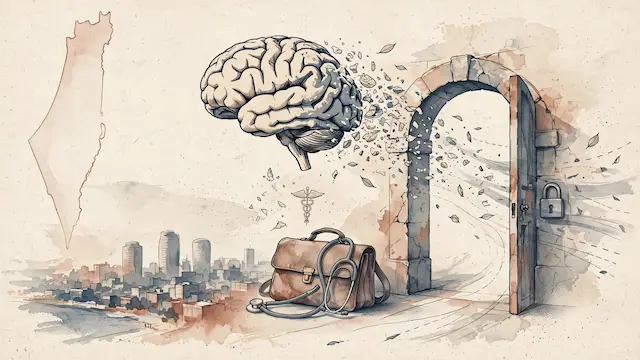
Israel is experiencing an unprecedented wave of medical professionals leaving the country, creating a significant void in its healthcare system. A recent study from Tel Aviv University revealed that approximately 1,400 doctors are expected to depart between 2023 and 2025, a nearly 94% increase compared to the previous decade. Even after accounting for returning specialists, the net annual loss stands at 255 doctors, five times the previous average.
Experts, including Professor Itai Ater, attribute this "brain drain" to a combination of factors: the controversial judicial overhaul plan that sparked widespread protests, the ongoing war in Gaza and its economic and social burdens, and widening internal divisions regarding military service and the distribution of responsibilities. These issues have prompted highly skilled individuals with the means to relocate to seek opportunities abroad.
The departing doctors represent critical expertise. One in five leaving is over 45, meaning experienced professionals are not transferring their knowledge to younger generations. Furthermore, 116 ear, nose, and throat, dermatology, and ophthalmology specialists, along with 188 surgeons, have left, representing about 6% of those in these fields. The departure of a specialist signifies the loss of years of education, training, and accumulated experience.
Compounding the issue, a Ministry of Finance report indicated that 24% of specialist doctors in public hospitals are nearing retirement age, while another quarter continue working past the legal age due to severe shortages. This creates a dangerous scenario where older doctors are exiting the workforce as younger ones emigrate.
Researchers warn that the current figures may not represent the peak of the crisis. The political trajectory following the war and upcoming elections will be crucial in determining if the situation escalates. If the trend continues, the loss of medical talent could evolve into a broader national crisis, impacting universities and the technology and engineering sectors.
While the study focused on doctors, it highlighted that they are merely an indicator of a wider "brain drain" affecting academics, engineers, and tech workers. Each departure represents not just a lost employee but the loss of years of education, training, and professional networks that are difficult to replace. This gradual erosion of human capital poses a quiet but severe threat to Israel's future capacity to train new generations and manage vital institutions.
The same event, reported separately by each outlet. Open a few to compare what different newsrooms emphasize — and what they leave out.
Left 1Centre 6Right 2Haredi 1Arab 3Other 9




























Not the same event — other stories that share this one’s people, places, or theme: background, reactions, and follow-ups.