
Israel Faces Alarming Doctor Exodus, Threatening National Resilience
Translated & summarized from Ynet by baba
A Tel Aviv University study reveals that 1,369 Israeli doctors left the country between 2023 and 2025, a significant increase from the previous decade. The exodus includes a growing number of senior physicians, raising concerns about the long-term impact on Israel's healthcare system and national resilience.
The story in 6 lines · by baba
- Over 1,300 Israeli doctors left the country between 2023-2025, a 94% increase from 2013-2015.
- A growing proportion of departing doctors are experienced senior physicians aged 45 and over.
- The trend exacerbates concerns as many remaining specialists are nearing retirement.
- All medical fields are affected, with sharp increases in core specialties.
- The net loss of doctors has quadrupled, indicating fewer are returning.
- Researchers warn of irreversible damage to national resilience if the trend continues.
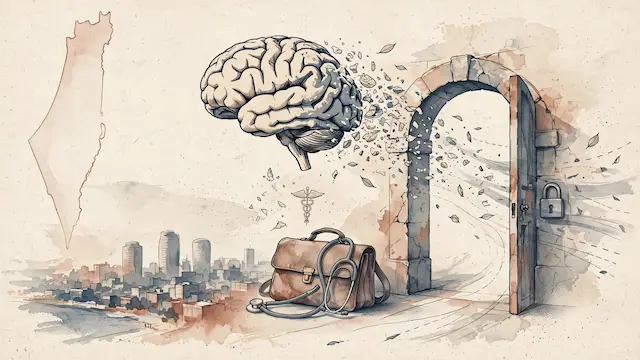
A new study from Tel Aviv University reveals a significant increase in the number of Israeli doctors leaving the country. Between 2023 and 2025, 1,369 physicians departed Israel for at least one year, a 94% surge compared to the 705 who left between 2013 and 2015. This exodus represents a loss of medical professionals equivalent to the entire staff of a major hospital, with a notable proportion being experienced senior doctors.
The research, based on data from the Central Bureau of Statistics, indicates that in 2023, 419 doctors left, followed by a peak of 530 in 2024, and an estimated 420 in 2025. Crucially, the proportion of departing doctors aged 45 and over has risen from 14% a decade ago to 20% in the recent period. This means approximately 270 senior physicians, compared to about 100 previously, have left, raising concerns that these departures are less likely to be temporary training stints and more indicative of permanent emigration.
This trend is particularly worrying as it coincides with a report from the Ministry of Finance stating that a quarter of public hospital specialists are nearing retirement age. The study highlights that the emigration affects all medical fields, with particularly sharp increases in internal medicine, surgery, and specialties like ENT, dermatology, and ophthalmology. For instance, nearly one in ten ophthalmologists, dermatologists, and ENTs under 60 have left.
Geographically, Tel Aviv district has been hit hardest, losing 429 doctors. The net loss of doctors, after accounting for those who return, has also increased dramatically. In 2023 and 2024 alone, Israel experienced a net loss of 509 doctors, a nearly fivefold increase from the average annual net loss of 54 between 2010 and 2019. Researchers emphasize that while temporary stays abroad for training are common, the increasing number of senior doctors leaving raises fears of a "snowball effect" that could severely damage Israel's economy and healthcare system.
Professor Itai Atar, who led the study, noted that the surge in departures began in 2023, predating the October 7th events, and suggested that the country's recent political and security climate may be a contributing factor. He warned that without intervention, Israel could reach a point of no return, leading to irreversible damage to its national resilience. The findings are set to be discussed in a special Knesset committee meeting.
Mentioned
The same event, reported separately by each outlet. Open a few to compare what different newsrooms emphasize — and what they leave out.
Left 1Centre 6Right 2Haredi 1Arab 3Other 9




























Not the same event — other stories that share this one’s people, places, or theme: background, reactions, and follow-ups.