US Ambassador Criticizes Israeli Settler Violence, Netanyahu's Inaction
Translated & summarized from Walla by baba
U.S. Ambassador Mike Harkey has condemned settler violence in the West Bank as 'Jewish terror,' visiting a Palestinian town with many American citizens. The article criticizes Israeli politicians, including Prime Minister Netanyahu, for inaction due to political considerations, potentially harming U.S.-Israel relations.
The story in 5 lines · by baba
- US Ambassador Mike Harkey condemns escalating settler violence as 'Jewish terror'.
- The violence targets Palestinian civilians, no longer justifiable as 'price tag' acts.
- Israeli politicians, including PM Netanyahu, are criticized for inaction.
- Netanyahu is accused of prioritizing political survival over addressing the issue.
- The situation strains U.S.-Israel relations and impacts American citizens.
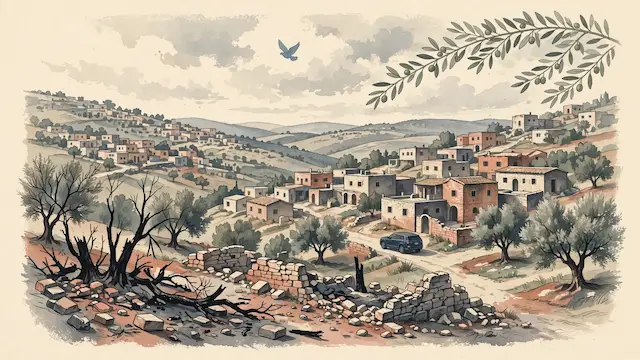
U.S. Ambassador to Israel, Mike Harkey, has publicly criticized the escalating violence perpetrated by Israeli settlers in the West Bank, labeling it as 'Jewish terror.' Harkey's remarks came during a visit to the Palestinian town of Turmus Ayya, where a significant portion of the residents hold American citizenship. This visit underscores the growing concern in Washington over the unrest, particularly as it impacts American citizens and complicates U.S. foreign policy objectives, especially with upcoming midterm elections.
The article argues that what began as sporadic riots has morphed into a wave of terror, with settlers targeting innocent Palestinians. While acknowledging differences in scale and impact compared to Arab terror, the author contends that such actions can no longer be excused as mere 'price tag' retaliations, especially when they harm uninvolved civilians. The piece questions the effectiveness of both the Shin Bet and the IDF in addressing the issue, suggesting a lack of clear directives from the government.
Politicians, including ministers like Bezalel Smotrich, are accused of remaining largely silent or offering superficial condemnations to avoid alienating voters who support figures like Itamar Ben-Gvir. Ben-Gvir himself is quoted as implying he would have joined the rioters if not for his ministerial position, reminiscing about his younger, more radical days. The article posits that Prime Minister Benjamin Netanyahu is aware of the damage and potential existential threat posed by this situation but is unwilling to act decisively before the upcoming elections, prioritizing his political survival.
Harkey's visit to Turmus Ayya is framed as a consequence of the Netanyahu government's failure to control the settler movement, which has now turned against those who once supported Israel's controversial actions. The ambassador, previously a strong defender of Israel, now finds himself in a difficult position, facing the reality that Netanyahu is unlikely to intervene before the elections. The article concludes with a pessimistic outlook, suggesting that under Netanyahu's leadership, Israel risks becoming a pawn for American interests, especially if the current situation is not addressed.
Mentioned
The same event, reported separately by each outlet. Open a few to compare what different newsrooms emphasize — and what they leave out.
Centre 4Right 1Haredi 2Arab 3Other 4
















Not the same event — other stories that share this one’s people, places, or theme: background, reactions, and follow-ups.