
Fuel Prices Set to Rise Sharply Post-Election in Israel
Translated & summarized from Walla by baba
Fuel prices in Israel are poised for a significant increase after the upcoming elections, with a liter of gasoline potentially nearing NIS 9. This rise follows the expiration of a tax reduction measure implemented by Finance Minister Bezalel Smotrich to stabilize prices before the vote. The tax cut is costing the state hundreds of millions of shekels in lost revenue. Even with a potential partial extension of the reduction, an initial price hike is expected due to rising global oil costs.
The story in 5 lines · by baba
- Fuel prices in Israel are expected to jump by up to NIS 1.50 per liter after elections.
- A liter of 95-octane gasoline could reach NIS 9, up from the current NIS 7.77.
- The price increase is linked to the expiration of a NIS 1 tax reduction on fuel.
- Finance Minister Bezalel Smotrich must decide on extending the tax cut post-election.
- Global oil price increases, influenced by Middle East tensions, are also driving up costs.
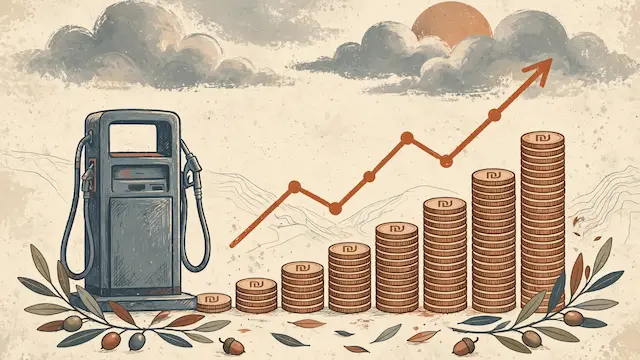
Fuel prices in Israel are expected to increase significantly immediately after the upcoming elections, with a liter of 95-octane gasoline potentially reaching NIS 9. The current price stands at NIS 7.77 per liter, and a jump of up to NIS 1.50 is anticipated in the coming week. This impending rise is largely due to the expiration of a tax reduction measure implemented by the Ministry of Finance. The reduction, initially set at NIS 0.50 and later increased to NIS 1 by Finance Minister Bezalel Smotrich, was designed to prevent a price surge before the elections. This tax cut, known as 'Blu', is a significant portion of the fuel price, with taxes typically accounting for over 60% of the cost and generating approximately NIS 20 billion annually for the state.
The tax reduction over the past two months is estimated to cost the state around NIS 467 million in lost revenue during a period of high wartime defense spending. Following the elections, Smotrich will need to decide whether to extend the tax reduction or allow prices to rise, potentially leaving the next government to deal with the consequences. Even if the tax reduction remains in effect, an initial price increase of about 30 agorot is expected by Saturday evening, bringing the price to just over NIS 8 per liter. This is attributed to a roughly 10% increase in oil prices since late September, influenced by expectations of further conflict between Israel and Iran, and the US.
The final price will be determined later in the week based on Mediterranean oil prices but may only remain stable for a few days before the larger increase takes effect.
Mentioned
The same event, reported separately by each outlet. Open a few to compare what different newsrooms emphasize — and what they leave out.
Centre 3Haredi 1Arab 1Other 4








Not the same event — other stories that share this one’s people, places, or theme: background, reactions, and follow-ups.

