
Israel Fuel Prices May Surge to Record High This Weekend
Translated & summarized from Kikar HaShabbat by baba
Israeli gasoline prices are poised to hit a record high of around 9 shekels per liter by Saturday, driven by a potential end to a tax reduction, rising global oil prices, and a stronger dollar. Finance Minister Bezalel Smotrich has not yet decided whether to extend the tax break, which costs the state 300 million shekels monthly. Economists warn the surge could increase inflation by 0.5% in November, impacting transportation and consumer goods.
The story in 5 lines · by baba
- Israeli gasoline prices may jump to a record 9 shekels per liter by Saturday.
- The price hike is linked to a potential end of a tax reduction by Finance Minister Smotrich.
- Global oil prices have risen to $110 per barrel due to tensions in the Strait of Hormuz.
- A stronger dollar against the shekel is also contributing to the expected fuel price increase.
- Economists predict the surge could raise Israeli inflation by 0.5% in November.
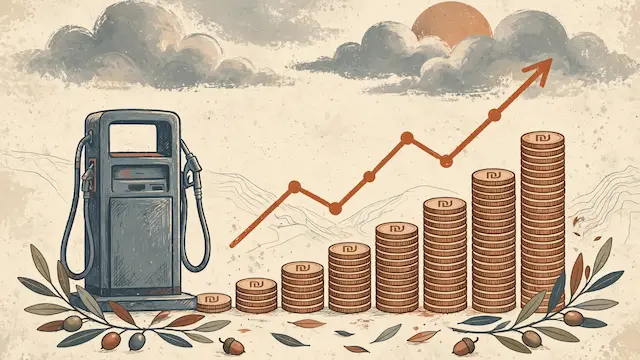
Israeli drivers may face a significant economic shock as gasoline prices are projected to reach an unprecedented high of approximately 9 shekels per liter for 95 octane fuel by Saturday evening. This sharp increase, compared to the current price of 7.77 shekels, is attributed to a combination of factors. These include a potential decision by Finance Minister Bezalel Smotrich not to extend a tax reduction on fuel, a surge in global oil prices, and a strengthening of the US dollar against the Israeli shekel.
At the beginning of October, Smotrich doubled the tax discount on fuel from half a shekel to a full shekel per liter, a measure that was set to expire at the end of the month. This benefit, costing the state an estimated 300 million shekels monthly, would add a full shekel to the price per liter if not renewed.
Beyond the expiring tax break, global oil prices have climbed to around $110 per barrel, a roughly 13% increase, driven by security tensions in the Strait of Hormuz due to the conflict between the US and Iran. Concurrently, the dollar has strengthened by about 3% against the shekel, reaching 3.11 shekels, which is expected to add another 10-20 agorot to the liter price.
Within the Ministry of Finance, there is a disagreement regarding the extension of the tax benefit. The professional staff opposes continued subsidies, which would cost an additional 300 million shekels in November, bringing the total to approximately 800 million shekels without a defined budget source. Sources indicate the minister has not yet made a final decision and will decide closer to the price-setting date, considering oil and foreign exchange market trends.
Economists warn that the potential price hike could lead to a broader wave of price increases across the Israeli economy. The consumer price index and inflation are estimated to rise by about half a percent in November due to increased transportation costs, which will likely be passed on to consumers for various goods and services. Smotrich had previously stated that the discount was intended to boost economic growth and maintain price stability.




