
Israel May See Sharp Fuel Price Hike After November 1st
Translated & summarized from Cursorinfo by baba
Gasoline prices in Israel are poised to jump by over 1 shekel per liter to nearly 9 shekels by November 1st if the Finance Ministry does not extend a temporary fuel tax reduction. The current tax break expires October 31st, and Finance Minister Bezalel Smotrich has yet to decide on an extension. The potential price hike, driven by global oil prices and the Hormuz Strait crisis, could also increase inflation by an estimated 0.5 percentage points.
The story in 6 lines · by baba
- Gasoline prices in Israel may rise to nearly 9 shekels per liter by November 1st.
- The potential price hike depends on extending a fuel tax reduction expiring October 31st.
- Finance Minister Bezalel Smotrich has not yet decided on extending the tax break.
- Global oil prices and the Hormuz Strait crisis have driven up fuel costs.
- Economists predict the price increase could add 0.5 percentage points to November inflation.
- Extending the tax break would cost the state budget an additional 300 million shekels.
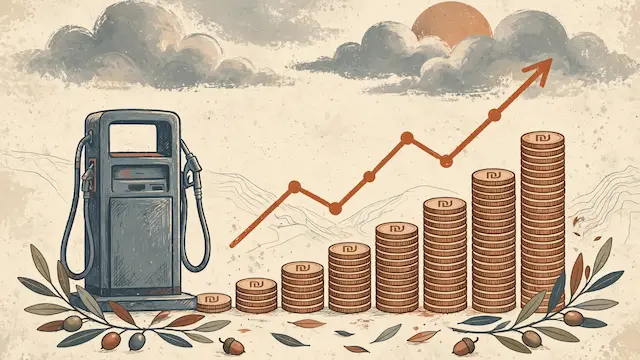
The cost of gasoline in Israel could reach a new record high of nearly 9 shekels per liter by November 1st, a significant jump from the current 7.77 shekels for AI-95 octane. This potential surge is contingent on the Ministry of Finance's decision regarding the extension of a temporary fuel tax reduction, which is set to expire on October 31st, just days after the upcoming Knesset elections.
Finance Minister Bezalel Smotrich has not yet decided whether to extend the tax break. The current reduction, increased in early October from 50 agorot to 1 shekel per liter, has kept the price of self-service AI-95 at 7.77 shekels. If the reduction is not extended, the price will automatically rise to 8.77 shekels. Further increases of 10-20 agorot due to global oil prices and dollar strength could push the price closer to 9 shekels.
The situation is exacerbated by the crisis around the Strait of Hormuz, which has driven oil prices to approximately $110 per barrel over the past two months. This price increase already led to a significant rise in gasoline costs in September and October, prompting the temporary tax relief.
However, maintaining the tax break poses a substantial challenge to the state budget. The existing tax concessions have already cost nearly 500 million shekels, and extending them for November would require an additional 300 million shekels. The professional leadership within the Ministry of Finance opposes continuing the measure due to a lack of funding sources.
Economists warn that a fuel price increase will raise transportation and delivery costs, potentially impacting the prices of goods and services and adding an estimated 0.5 percentage point to inflation in November. The Ministry of Finance confirmed that a final decision is pending, with Smotrich expected to decide after the elections, considering oil market conditions and currency exchange rates. Without government intervention, drivers face a price increase of over 1 shekel per liter starting November 1st.



