
Fuel Prices in Israel Poised for Dramatic Jump Past NIS 9
Translated & summarized from Ice by baba
Fuel prices in Israel are expected to jump to nearly NIS 9 per liter after the October 27 elections if Finance Minister Bezalel Smotrich does not extend a NIS 1 tax reduction. This surge is driven by rising global oil prices and a stronger dollar, with the tax break costing the state nearly NIS 500 million. Economists warn of a potential 0.5% inflation increase and broader price hikes. The Ministry of Finance stated the minister's decision is pending market developments.
The story in 6 lines · by baba
- Fuel prices in Israel may exceed NIS 9 per liter after October 27 elections.
- Finance Minister Bezalel Smotrich must decide on extending a NIS 1 fuel tax reduction.
- Rising global oil prices and a stronger dollar are contributing factors.
- Canceling the tax break could raise prices by NIS 1 to NIS 8.77 per liter.
- Economists predict a 0.5% inflation increase and wider price hikes if the tax break ends.
- The tax reduction has cost the state nearly NIS 500 million so far.
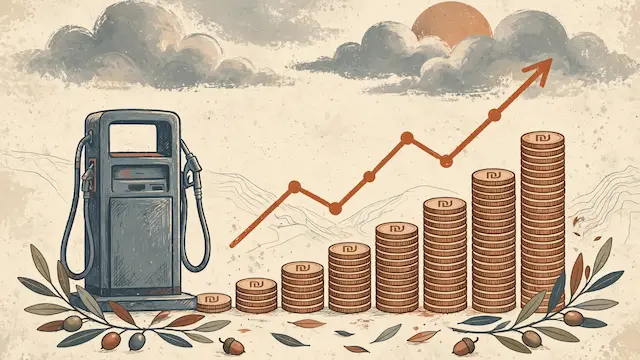
Fuel prices in Israel are expected to surge dramatically, potentially breaking the NIS 9 per liter mark for 95-octane gasoline as early as the upcoming weekend, following the general elections on Tuesday, October 27. This significant price hike is contingent on the current Minister of Finance, Bezalel Smotrich, not extending a tax reduction on fuel. The increase is driven by rising global oil prices, which have reached approximately $110 per barrel due to the crisis in the Strait of Hormuz, and a strengthening dollar against the shekel.
Previously, a NIS 0.50 tax reduction was implemented in September when prices hit a record high of NIS 8.25 per liter, matching a 2012 record. That reduction was initiated by Prime Minister Benjamin Netanyahu. In 2022, then-Finance Minister Avigdor Lieberman reduced the tax by up to NIS 1, a measure later canceled by Smotrich.
Currently, the NIS 1 tax reduction implemented by Smotrich at the beginning of October is set to expire at the end of this week. However, professional officials within the Ministry of Finance oppose extending this benefit, citing its cost, which has already reached nearly NIS 500 million and is projected to increase by an additional NIS 300 million in November, totaling NIS 800 million from the state budget without a defined source.
Calculations indicate that canceling the tax benefit alone would immediately raise the price from the current NIS 7.77 to NIS 8.77 per liter. An additional increase of NIS 0.10 to NIS 0.20 is possible due to international market price hikes and the dollar's appreciation to NIS 3.11. Beyond the direct impact on drivers, economists warn that such a sharp fuel price increase could boost inflation by about 0.5% in November, leading to broader price rises for goods and services.
Sources within the Ministry of Finance stated that Minister Smotrich has not yet decided on extending the tax reduction. The final policy will be determined closer to the setting of next month's fuel prices, taking into account developments in the oil and foreign exchange markets.
Mentioned



