
Global Media Views Israeli Election as Crucial Juncture
Translated & summarized from Vesty by baba
International media outlets are covering Israel's upcoming election on October 27th, framing it as a critical moment for the nation's future. Prime Minister Benjamin Netanyahu faces challenges from Gadi Eisenkot, a candidate seen as a potential "change" agent, while the election is also analyzed through the lens of Mizrahi-Ashkenazi relations. Media outlets highlight the impact of the October 7th attacks on Netanyahu's "Mr. Security" image and the deep societal divisions exacerbated by ongoing conflicts and political reforms. The election is considered highly significant, with debates expected to focus on security, the economy, and the future of judicial and social policies.
The story in 6 lines · by baba
- International media view Israel's October 27 election as a crucial juncture for the nation's future.
- Gadi Eisenkot is presented as a leading "change" candidate, contrasting with Prime Minister Benjamin Netanyahu.
- The election is analyzed through the lens of Mizrahi-Ashkenazi relations and societal divisions.
- The October 7th attacks have significantly impacted Netanyahu's reputation as "Mr. Security."
- Key issues include the war's cost, ultra-Orthodox draft exemptions, and judicial reform.
- Tens of thousands of Israelis are returning to the country to participate in the vote.
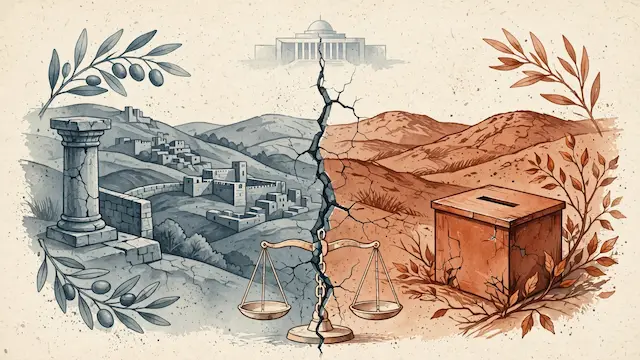
With Israel's election just under three days away, major international media outlets are focusing on Prime Minister Benjamin Netanyahu's political future, the prospects of Gadi Eisenkot, and the deep societal divisions within the country. Following four years of protests against judicial reform, the October 7th attacks, and multi-front warfare, several publications on Saturday, October 24th, are framing the October 27th vote as decisive for the nation's path.
CNN highlighted Gadi Eisenkot, leader of the New Hope party, as the leading candidate for a "change bloc." The outlet suggested his primary political asset is "not being Netanyahu," which is sufficient for many voters. His background as a Mizrahi (of Middle Eastern origin) Jew, from a large family, could also make him Israel's first prime minister from that demographic. This aspect gained attention after Channel 14 host Inon Magal controversially compared Eisenkot to a "monkey" backed by Ashkenazi elites. CNN also noted Eisenkot's four decades of military service, his joining the government with Benny Gantz after the war began, and the death of his son Gal in Gaza. Despite leading in polls, forming a coalition remains uncertain, with Eisenkot not ruling out a minority government. While stylistically different from Netanyahu, their security stances are similar, with Eisenkot criticizing the prime minister for lacking a political strategy to solidify military gains.
The Wall Street Journal analyzed the election through the lens of Ashkenazi-Mizrahi relations, identifying Mizrahim as a "center of gravity" in Israeli politics. The paper recalled past discrimination against Mizrahi immigrants and their long-standing support for the Likud party, solidified by Menachem Begin's 1977 victory. Eisenkot's challenge is to break this connection, though he downplays his origins and emphasizes that roots shouldn't dictate voter choice. The Journal suggested that Eisenkot might be hindered by associations with the left and institutions like the Supreme Court, perceived by some Mizrahim as an Ashkenazi stronghold. Conversely, he could resonate with Mizrahi voters who still trust these institutions. The paper concluded that Mizrahim "have already won" as Israeli security policy has shifted rightward post-October 7th.
The Guardian questioned whether Benjamin Netanyahu, the "political magician" who has dominated Israeli politics since the 1990s, has any new tricks left. The paper noted that the election again divides the country into supporters and opponents of "Bibi," despite many rivals having previously worked with him. Eisenkot's promises of responsibility, term limits, and a "state without lies" are presented as a contrast to the incumbent. Netanyahu's platform of choosing between "right or Palestine" was also mentioned, even as some right-wing politicians reject a Palestinian state. The Guardian listed Netanyahu's unfulfilled promises, including defeating Hamas and Iran's nuclear program, and cited the consequences of October 7th. His continued influence is attributed to loyal supporters, vast experience, and agenda-setting skills, with Itamar Ben-Gvir seen as a "rising moon" to Netanyahu's "sun."
The New York Times described Israel as "tired and divided" and the 77-year-old Netanyahu as a politician attempting reinvention. Despite appearing paler, he continues campaigning. The paper stated that October 7th irrevocably damaged his "Mr. Security" reputation. Post-attack, Netanyahu shifted from short wars to leading the country's longest conflict, a move journalist Mazal Mualem attributed to political survival, suggesting he "killed the old Bibi and presented a new one to the world." Key issues for Netanyahu include the war's cost, the government's refusal to accept responsibility for October 7th, ultra-Orthodox draft exemptions, and judicial reform linked to his corruption cases.
Corriere della Sera called the election the most important in Israel's nearly 80-year history. The unfinished war, potential conflict with Iran, demographic shifts, and the Palestinian issue create a "now or never" feeling for Netanyahu's opponents. The Italian newspaper noted that the prime minister is fighting not just for political survival but also to avoid prison, referencing his ongoing trials. Eisenkot is portrayed as a less charismatic rival focused on pragmatism and a return to "normalcy." Post-election debates are expected to center on ultra-Orthodox conscription, judicial reform, and Supreme Court appointments. The Telegraph noted the return of tens of thousands of Israelis to vote.
Mentioned
The same event, reported separately by each outlet. Open a few to compare what different newsrooms emphasize — and what they leave out.
Centre 2Haredi 1Arab 1Other 1



Not the same event — other stories that share this one’s people, places, or theme: background, reactions, and follow-ups.



