Full coverage· Politics· Updated
Israeli Elections Approach Crucial Juncture Amidst Unclear Alliances
Israeli parliamentary elections on October 27 are marked by uncertainty as no political bloc is projected to win a clear majority, according to recent polls. The contest is primarily between Prime Minister Benjamin Netanyahu's camp and the opposition led by Gadi Eisenkot.
2 newsrooms · 2 languages · since
Plus
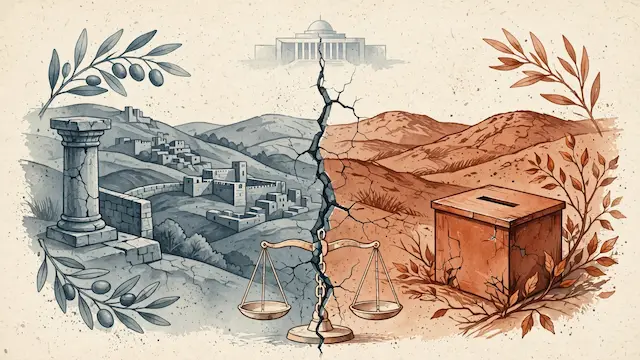
What happened
- 01Israeli parliamentary elections on October 27 face an unclear outcome with no bloc projected to secure a majority.
- 02Polls show a close race between Prime Minister Benjamin Netanyahu's bloc and the opposition led by Gadi Eisenkot.
- 03Forming a government requires at least 61 Knesset seats, making post-election coalition negotiations critical.
- 04Arab and smaller parties are expected to play a pivotal role in coalition formation due to the close race.
- 05The final seat distribution and government formation remain uncertain, influenced by voter turnout and undecided voters.
Coalition calculations, particularly involving Arab and smaller parties, will be crucial in forming the next government, which requires at least 61 Knesset seats. Post-election negotiations are expected to be complex, with the final outcome dependent on alliances and potential compromises.
The coverage
2 newsrooms on this story
Who covered it
- LeftNone
- Centre1
- RightNone
- HarediNone
- Arab1
How it broke
See which of the 2 newsrooms broke it, and who waited



