Israel Heads to Polls in Pivotal Election Amid Deep Divisions
Translated & summarized from Jüdische Allgemeine by baba
Israelis will vote on October 27 in a pivotal election that could signal a major political shift. Prime Minister Benjamin Netanyahu faces challenges from opposition leader Gadi Eizenkot, whose party is leading in polls. Key issues include national security, the economy, and accountability for the October 7 attacks. The election follows the collapse of Netanyahu's right-wing coalition and occurs amidst deep societal divisions. The final outcome may depend on the support of Arab parties, and the President is working to prevent a repeat of frequent elections.
The story in 6 lines · by baba
- Israel's general election is scheduled for October 27 amid deep societal divisions and security concerns.
- Prime Minister Benjamin Netanyahu's right-wing coalition government's term has ended.
- Former Army Chief of Staff Gadi Eizenkot's new party is currently leading in opinion polls.
- Key election issues include national security, the economy, and accountability for the October 7 attacks.
- Forming a majority government may require support from Arab parties, though cooperation is uncertain.
- A significant portion of voters remain undecided, making them a critical factor in the election outcome.
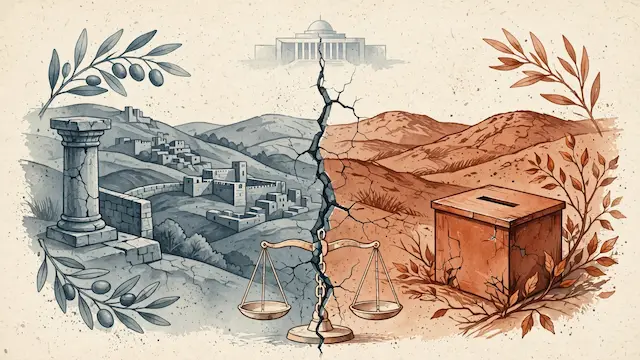
Israel is set to hold a general election on October 27, marking the end of the 25th Knesset's four-year term. The election comes amidst profound societal divisions and follows the deadliest attack in Israel's history, the Hamas massacres of October 7, 2023, which plunged the country into a multi-front war. This election is considered one of the most consequential in the nation's history, with key issues including accountability for the October 7 failures, the burden of military service, the independence of democratic institutions and the judiciary, and how to maintain economic prosperity and international alliances amid growing polarization and isolation.
Prime Minister Benjamin Netanyahu leads the most right-wing and religious coalition in Israel's history, which has reached the natural end of its term. Critics of Netanyahu's government view the election as a final chance to halt Israel's trajectory towards a more authoritarian, religiously dominated, and internationally isolated state. They point to his ongoing corruption trial and widespread protests against his government's judicial overhaul campaign as reasons for his potential downfall.
Netanyahu and his allies defend their record, asserting their policies are vital for Israel's security, its Jewish character, and the restoration of elected officials' power. However, polls suggest a potential shift, with former Army Chief of Staff Gadi Eizenkot's newly formed Jaschar party leading Netanyahu's Likud in several surveys. Eizenkot has also led in direct polls for prime minister, sometimes by nearly ten percentage points.
While opposition parties like Bejachad, Yisrael Beiteinu, and the Democrats, along with Jaschar, have consistently polled slightly ahead of Netanyahu's bloc, they have not secured enough seats for a majority. Forming a government may depend on the support of Arab parties. Mansour Abbas, chairman of the Ra'am party, indicated potential support for a change government, possibly through external backing of a minority coalition, though Eizenkot has previously ruled out cooperation based on a lack of shared values.
With approximately 7.33 million Israelis eligible to vote and 38 parties on the ballot, the outcome remains uncertain. Around 30 percent of voters are undecided, making them a crucial factor. To enter the Knesset, parties need at least 3.25 percent of the vote, equivalent to about four seats. In the 2022 election, nearly nine percent of votes went to parties that failed to cross this threshold. Current projections suggest only eleven to thirteen parties will make it into the Knesset, with several hovering near the electoral threshold.
Economic issues and national security are paramount for voters, with 34 percent citing the economy and 32 percent security as their top concerns, according to an Israel Democracy Institute poll. Supporters of the current government prioritize security, while opposition supporters focus on the economy and cost of living. Both Netanyahu and Eizenkot are campaigning intensely to widen the gap between their respective blocs, causing some frustration within the opposition, with Eizenkot denying allegations of planning a unity government with Netanyahu. The government bloc is working to consolidate right-wing votes, pressuring smaller parties to withdraw their candidacies.
Mentioned
The same event, reported separately by each outlet. Open a few to compare what different newsrooms emphasize — and what they leave out.
Centre 1Arab 1

Not the same event — other stories that share this one’s people, places, or theme: background, reactions, and follow-ups.


