
Israeli Election Uncertainty: Netanyahu Could Stay PM Even Without Majority
Translated & summarized from Cursorinfo by baba
Millions of Israelis are voting in an election where no single bloc is guaranteed to form a government, potentially allowing Prime Minister Benjamin Netanyahu to remain in power even if his opponents win more seats. The outcome depends heavily on post-election coalition negotiations, with multiple complex scenarios possible if a clear majority isn't achieved. President Yitzhak Herzog will play a key role in tasking a candidate with forming a government. Security concerns and efforts to boost voter turnout, including from Israelis abroad, are also prominent factors.
The story in 6 lines · by baba
- Israeli elections may result in a deadlock, allowing Benjamin Netanyahu to remain Prime Minister without a clear majority.
- No single political bloc is guaranteed to secure enough mandates to form a government after the upcoming election.
- President Yitzhak Herzog will task a candidate with forming a government, a process that could lead to new elections.
- Security concerns, including warnings of Iranian influence and potential attacks, are heightened ahead of the vote.
- An estimated 67,000 Israelis living abroad are expected to return to vote, potentially influencing the close election results.
- The final distribution of Knesset seats may remain uncertain until all votes, including those from 'double envelopes,' are counted.
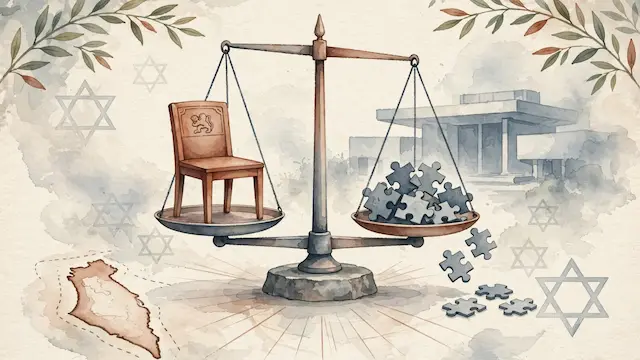
Millions of Israelis are set to vote in the upcoming election, with political parties bracing for a scenario where no single bloc can form a government. The outcome hinges not just on election results but crucially on post-election coalition negotiations and the ability to secure a Knesset majority. Even if Netanyahu's opponents win more seats, they may struggle to unite behind a single candidate for prime minister, potentially allowing Netanyahu to remain in office.
Polls generally show the bloc opposing Benjamin Netanyahu leading the current coalition. However, the "change bloc" parties have not yet secured enough mandates based on existing agreements to form a government. Netanyahu and his allies also face uncertainty, with some polls giving them an advantage while others show them falling short of a majority. The electoral threshold could play a significant role, as a small number of votes can shift the balance of power.
Several complex scenarios could emerge if no bloc achieves a stable majority. These include a national unity government led by Netanyahu, a broad coalition under a "change bloc" leader, or a minority government. Key opposition figures like Gadi Eisenkot, Naftali Bennett, and Avigdor Lieberman have pledged not to join a Netanyahu government, though internal dissent within Likud is not apparent. The idea of a minority government also faces resistance from "change bloc" partners, and a party switching allegiances seems unlikely.
The President's office, headed by Yitzhak Herzog, will play a crucial role in consultations and in tasking a candidate with forming a government, as the law does not obligate the president to automatically assign the mandate to the largest party. If the first attempt fails, another candidate can be given the chance. Should all efforts to form a government fail, new elections could be called. Despite reports of discussions about a unity government, the President's residence has denied them, with Herzog expressing a desire to prevent repeat elections.
Amidst the political maneuvering, security concerns are rising. Netanyahu has stated that intelligence services warned of Iranian attempts to influence the elections, and Defense Minister Israel Katz cautioned against a potential attack on Israel before the vote. These warnings have fueled political tensions, with opponents accusing Katz of preemptive political maneuvering. Security forces are preparing for the election day with extensive personnel deployment and measures against disinformation, while the "Election Shield" program aims to counter attempts to disrupt systems and undermine trust in the results.
Turnout is another critical factor, with parties working to mobilize their bases and attract new voters. The Supreme Court has restricted the real-time sharing of voter turnout data by election officials, potentially impacting mobilization tactics. An initiative called Fly&Vote estimates around 67,000 Israelis living abroad plan to return to vote, a number that could significantly influence the close race. A compromise was reached regarding Fly&Vote's operations, with organizers agreeing not to subsidize flights or provide discounts beyond existing arrangements, while Likud withdrew a lawsuit and received compensation for legal costs.
As election day approaches, the outcome remains uncertain. The final distribution of mandates may not be clear until all votes are counted, especially those from "double envelopes" which account for a significant portion of the total and could represent around 15 Knesset seats. The political landscape remains fluid, with the possibility of prolonged parliamentary deadlock and further elections if a consensus government cannot be formed.
Mentioned


