
Israel Faces Potential Repeat Elections Amidst Government Formation Stalemate
Translated & summarized from Ynet by baba
Israel is facing the high probability of repeat elections as no political bloc appears capable of forming a government with five days left until the vote. Prime Minister Benjamin Netanyahu is campaigning to boost turnout in Likud strongholds, while opposition parties aim for high participation in liberal areas. Polls indicate neither the right-wing bloc nor the "change bloc" can secure the necessary 61 seats for a majority, making further elections likely.
The story in 6 lines · by baba
- Most polls indicate no Israeli bloc can form a government, raising the likelihood of repeat elections.
- Prime Minister Netanyahu is urging Likud supporters to vote, while "change bloc" parties seek high turnout in liberal areas.
- Neither the right-wing bloc nor the "change bloc" are projected to reach the 61 seats needed for a majority.
- Netanyahu is reportedly trying to recruit defectors from opposition parties to form a coalition.
- Key figures have ruled out various coalition scenarios, including unity governments or alliances with Arab parties.
- Repeat elections in 2027 are considered the most probable outcome if no last-minute political shifts occur.
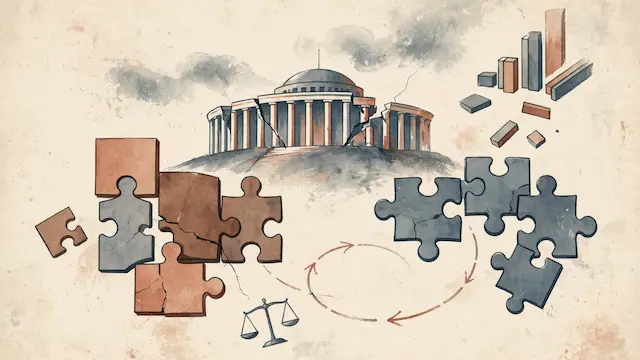
With five days remaining until the election, most polls indicate no single bloc has the ability to form a government, suggesting a possibility of repeat elections. Dramatic shifts could occur based on voter turnout, votes for parties failing to pass the electoral threshold, last-minute changes, or leaders reneging on campaign promises.
Parties are focusing on encouraging voter turnout, with Prime Minister Benjamin Netanyahu targeting Likud strongholds and the "change bloc" aiming for high turnout in liberal areas. Netanyahu is also pressuring Ofer Winter's Am Israel party and Motty Leitner's Haredi public party to withdraw from the race, though both announced they would continue. Winter accused Bezalel Smotrich of lying, while Leitner, after meeting Netanyahu, sharply criticized Shas and United Torah Judaism.
Recent polls show a significant lead for the "change bloc" but still short of the 61 seats needed for a majority. Scenarios for government formation include a right-wing government (with or without Winter), which polls suggest is unlikely to reach 61 seats. Likud is reportedly considering recruiting defectors, particularly from Gadi Eisenkot's party. A "change government" is also considered unlikely to reach 61 seats, though high turnout could alter the picture, potentially making Yoav Segalovitz of Ra'am the 61st seat. Avigdor Lieberman's claims of Likud defectors have not materialized in past elections.
Other scenarios, such as unity or rotation between Likud and "change bloc" parties, or a unity government led by Eisenkot, Bennett, or Lieberman, are deemed very unlikely. "Change bloc" parties have repeatedly stated they will not sit with parties that were in the government on October 7th. Eisenkot has explicitly vowed to resign if he sits under Netanyahu, even in a rotation. A unity government with a Likud candidate other than Netanyahu, or a "change government" with Ra'am, are also considered highly improbable due to stated objections from key figures like Lieberman, Bennett, and Eisenkot.
A minority government led by Eisenkot, even with external support from Ra'am or parts of the Joint List, is also unlikely, as Lieberman has declared he will vote against it. Bennett and Lieberman have also ruled out a government relying on the abstention of Arab parties, deeming it immoral and impractical. Given the current polling and political declarations, repeat elections in 2027 appear to be the most probable outcome if no last-minute changes occur.
Mentioned
The same event, reported separately by each outlet. Open a few to compare what different newsrooms emphasize — and what they leave out.
Centre 1Other 1

Not the same event — other stories that share this one’s people, places, or theme: background, reactions, and follow-ups.




