
Israel Warns Hamas Exploiting Gaza Merchants for Economic Gain
Translated & summarized from JDN by baba
Israel's Coordinator of Government Activities in the Territories warned that Hamas is extorting Gaza merchants, demanding significant taxes and cash from goods entering the Strip. This has led Gaza merchants to halt coordination for truck entries, potentially disrupting supplies. COGAT alerted the international community, emphasizing the security implications of Hamas's economic strengthening and warning against false claims of Israeli non-compliance.
The story in 6 lines · by baba
- Hamas is imposing a dual taxation system on Gaza merchants, demanding high fees and cash from goods.
- A Gaza merchant was arrested for refusing to pay Hamas taxes, prompting merchants to halt truck entry coordination.
- Israel's COGAT warned this strengthens Hamas economically and poses a security threat to Gaza.
- COGAT alerted international officials, including Nikolay Mladenov and UN coordinator, about the crisis.
- The halt in coordination could impact Israel's commitment to delivering 600 daily truckloads of goods to Gaza.
- COGAT holds Hamas responsible and warns of false claims against Israel regarding the situation.
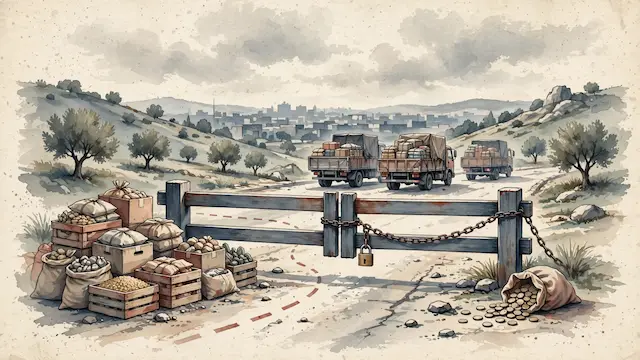
Israel's Coordinator of Government Activities in the Territories (COGAT), Major General Yoram Halevi, has issued a stark warning regarding Hamas's aggressive taxation of private merchants in the Gaza Strip. According to COGAT, Hamas's revenue collection mechanism allows the organization to seize significant funds, thereby strengthening its economic grip and deepening its control over the population.
Hamas reportedly imposes a dual taxation system: merchants must pay approximately 10,000 shekels for each truckload of goods entering Gaza. Additionally, they are compelled to sell about 30% of their merchandise in cash, enabling Hamas to directly control the revenue generated from these sales. COGAT highlighted that this system allows Hamas to profit from incoming goods and consolidate its power through civilian commerce.
The situation escalated after a Gaza merchant allegedly refused to comply with Hamas's tax demands. The merchant was arrested by Hamas security forces and sent to Abbas Prison in the Strip. In response, Gaza merchants announced they would halt coordination for truck entries starting the next day, citing fears for their lives and safety.
This development raises concerns about disruptions to the supply of goods into Gaza. COGAT emphasized that beyond the logistical impact, this issue is a security concern, enabling Hamas to strengthen itself and reinforce its control mechanisms. In response to the merchants' announcement, COGAT sent a letter to senior international community officials, including Peace Council head Nikolay Mladenov, U.S. General Jeffress, and the UN coordinator for the region.
The letter stressed that the halt in coordination could jeopardize Israel's commitment to allowing 600 truckloads of goods into Gaza daily. Major General Halevi placed responsibility for the situation squarely on Hamas, cautioning that the organization might exploit the crisis to spread false claims that Israel is not upholding its commitments under the agreement. COGAT reiterated its warning that Hamas's economic empowerment through this extortion scheme poses a broader threat. The article concludes by noting that it remains to be seen whether the international community will act and if truck entry coordination can resume without endangering the merchants.
The same event, reported separately by each outlet. Open a few to compare what different newsrooms emphasize — and what they leave out.
Centre 5Right 5Haredi 2Other 2
















Not the same event — other stories that share this one’s people, places, or theme: background, reactions, and follow-ups.
