
Hamas Extorts Truckers Entering Gaza, Israel Confirms
Translated & summarized from Arutz Sheva by baba
Israel confirmed that Hamas is extorting private merchants bringing goods into Gaza, demanding about 10,000 shekels per truck. This has caused merchants to halt coordination of goods, impacting the daily truck target set by a ceasefire agreement. Hamas also reportedly forces cash sales and has arrested a merchant's son for non-compliance. Israel stated it will continue humanitarian aid deliveries, estimating current humanitarian trucks meet Gaza's needs.
The story in 6 lines · by baba
- Hamas is extorting private merchants entering Gaza, demanding 10,000 shekels per truck, Israel confirmed.
- Merchants have halted goods coordination into Gaza due to Hamas threats and the arrest of a merchant's son.
- Hamas's extortion scheme includes forcing 30% of goods to be sold for cash, according to reports.
- The private sector accounts for half of Gaza's weekly truck entries, impacting the 600-truck daily target.
- Israel will continue humanitarian aid deliveries via the UN and other international bodies.
- Israel warned Hamas may blame it for shortages resulting from the merchant's strike.
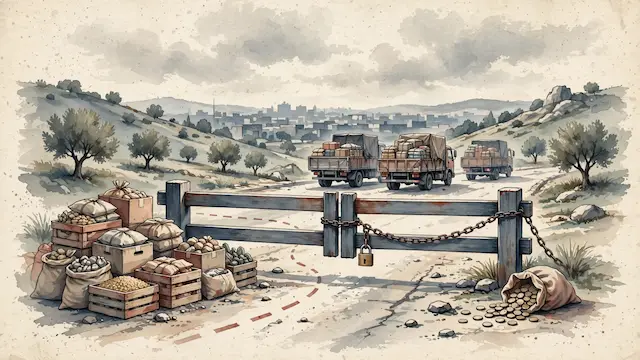
Israel has officially confirmed that Hamas is operating a forced collection mechanism targeting merchants bringing goods into the Gaza Strip. In a letter to international community leaders, the Coordinator of Government Activities in the Territories (COGAT), Maj. Gen. Yoram Levy, revealed that Hamas is demanding approximately 10,000 shekels per truck from private merchants. This extortion scheme, which also mandates that 30% of goods be sold for cash, has led merchants to halt coordination of goods entering Gaza. According to COGAT, the private sector accounts for about half of all trucks entering Gaza weekly, and their cessation of activity jeopardizes Israel's ability to meet the ceasefire agreement's target of 600 trucks per day.
Hamas's demands are reportedly also being extended to sub-merchants and are intended for drinking water supplies, indicating a desire to control not just the entry of goods but also their sale and the flow of money within the Strip. The letter details an incident where Hamas security forces arrested the son of a merchant who refused to comply with the organization's tax demands, further pressuring merchants. Merchants have announced they will stop coordinating goods entry until further notice due to these threats and fears for their safety.
COGAT emphasized that Hamas bears responsibility for the consequences of this disruption and warned that the organization might exploit the situation to claim shortages and blame Israel for violating the ceasefire agreement. Israel, however, stated it will continue to allow humanitarian aid and supplies into Gaza through the UN, international organizations, and donor countries, estimating that approximately 250 trucks per day via these humanitarian channels meet the Strip's needs. The letter was sent to Nikolay Mladenov, Maj. Gen. Jasper Jeffers, and Ramiz Alakbarov, urging them to act to prevent Hamas from exploiting aid and goods for its economic and military buildup.
Mentioned
The same event, reported separately by each outlet. Open a few to compare what different newsrooms emphasize — and what they leave out.
Centre 4Right 4Haredi 1Other 1










Not the same event — other stories that share this one’s people, places, or theme: background, reactions, and follow-ups.

