
Gaza Aid Shipments Halted by Private Traders Amid Hamas Extortion
Translated & summarized from Israel Hayom by baba
Private traders in Gaza have suspended the entry of goods into the Strip due to Hamas's extortionate taxation and threats, impacting approximately 50% of weekly shipments. The traders are reportedly being forced to pay significant sums per truck and sell goods for cash, which they refuse to do. The halt, which began Wednesday, jeopardizes Israel's commitment to allow 600 trucks daily under a ceasefire agreement, with Israel holding Hamas responsible for the consequences.
The story in 5 lines · by baba
- Gaza traders halted goods entry due to Hamas extortion and threats, impacting 50% of weekly shipments.
- Hamas is demanding approximately 10,000 shekels per truck and cash sales, contradicting bank transfer agreements.
- Hamas security forces arrested a trader's son after the trader refused to comply with tax demands.
- The halt jeopardizes Israel's goal of 600 trucks daily under the ceasefire agreement.
- Israel holds Hamas responsible for the consequences and urges international intervention.
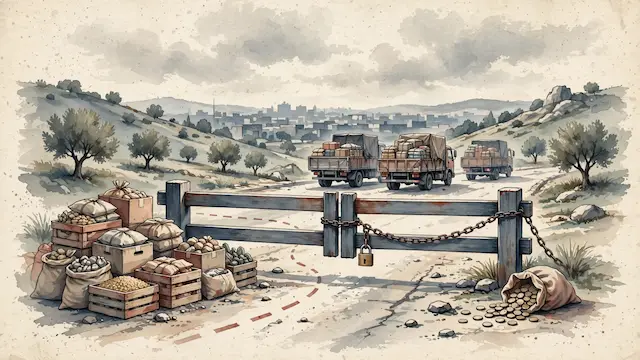
Private sector traders in Gaza have announced a halt to coordinating the entry of goods into the Strip until further notice, prompting Israel's Coordinator of Government Activities in the Territories (COGAT), Maj. Gen. Yoram Levy, to inform international officials. The decision by the traders follows Hamas's imposition of a "forced taxation" mechanism and escalating threats against those who refuse to comply with its demands. According to reports, Hamas security forces arrested the son of a trader on Tuesday and took him to Abbas prison after the trader refused to pay the organization's tax demands. In response and fearing for their lives, the traders declared they would cease coordination starting Wednesday.
Hamas is reportedly demanding approximately 10,000 shekels per truck of goods entering Gaza, in addition to requiring traders to sell about 30% of their merchandise in cash, allegedly to seize the funds. These demands contradict the traders' approved commitments to conduct transactions solely via bank transfers. The taxation mechanism has reportedly been extended to sub-traders and Hamas intends to apply it to drinking water as well.
In a letter to senior international community figures, including UN envoy Nikolai Mladenov, Maj. Gen. Jasper Jeffers, and UN Humanitarian Coordinator Ramiz Al-Akbarov, Levy emphasized that the private sector accounts for roughly 50% of all weekly truck entries into Gaza. He stated that the cessation of their operations due to Hamas threats jeopardizes Israel's ability to meet the agreed-upon target of 600 trucks per day under the ceasefire agreement.
Levy clarified that Hamas bears responsibility for the consequences of the private sector's halt and urged international actors to act immediately to prevent Hamas's interference in the entry of aid and goods. He warned that Hamas would exploit the situation to spread false claims of shortages and Israeli non-compliance, aiming to shift blame to Israel and conceal its own role in disrupting the flow of goods, while using the situation for its own economic and military buildup.
Mentioned
The same event, reported separately by each outlet. Open a few to compare what different newsrooms emphasize — and what they leave out.
Centre 4Right 4Haredi 1Other 1










Not the same event — other stories that share this one’s people, places, or theme: background, reactions, and follow-ups.
