
Gaza Merchants Halt Truck Deliveries Amid Hamas Extortion Claims
Translated & summarized from Maariv by baba
Gaza merchants have stopped coordinating truck deliveries of goods into the Strip, citing Hamas demands for 10,000 shekels per truck and a requirement to sell goods for cash. The Coordinator of Government Activities in the Territories (COGAT) warned this could disrupt half of Gaza's supplies and jeopardize a ceasefire agreement. The halt was triggered by the arrest of a merchant's son after his father refused to pay Hamas. Humanitarian aid deliveries will continue, but the private sector's stoppage may impact overall supply levels.
The story in 6 lines · by baba
- Gaza merchants halted truck deliveries due to Hamas demanding 10,000 shekels per truck and cash sales.
- The halt could disrupt approximately half of the supplies entering Gaza and threaten a ceasefire agreement.
- Hamas's actions include demanding cash payments and arresting the son of a merchant who refused to comply.
- COGAT warned Hamas may use the disruption to blame Israel for shortages and violations.
- Humanitarian aid deliveries via international organizations will continue unaffected.
- The resumption of commercial activity depends on Hamas ceasing threats and guaranteeing merchant operations.
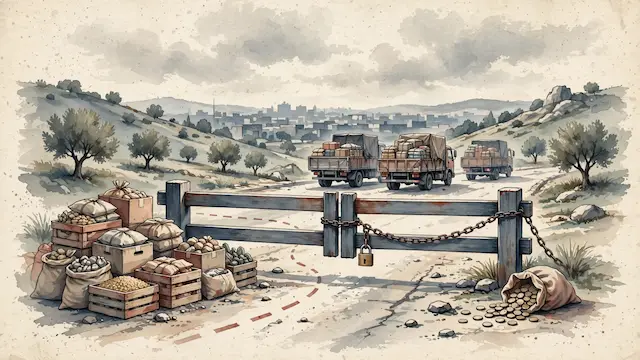
Gaza merchants have announced a halt to coordinating the entry of commercial goods trucks into the Strip, citing threats and demands from Hamas for a payment of approximately 10,000 shekels per truck. The Coordinator of Government Activities in the Territories (COGAT) warned that this action could disrupt about half of the supplies entering Gaza and jeopardize the implementation of a ceasefire agreement. According to reports received by COGAT, Hamas is also requiring merchants to sell about 30% of their goods for cash, which merchants claim is an attempt by the organization to seize funds. These demands contradict the merchants' commitments to use only bank transfers for payments. Hamas has reportedly expanded this collection mechanism to sub-merchants and intends to include drinking water suppliers next. This system allows Hamas to collect money directly from commercial activity, even when goods enter under regulated arrangements. COGAT fears that the cash requirement bypasses banking payment mechanisms and puts funds under Hamas control, potentially enabling its economic and military strengthening. The immediate trigger for the halt occurred when Hamas security personnel reportedly arrested the son of a merchant who refused to comply with the payment demands, holding him in Abbas prison. In response to the arrest and fear for their safety, merchants declared an immediate cessation of coordination for incoming trucks. COGAT views this mechanism as Hamas shifting from merely harming merchants' operations to disrupting a key supply channel for Gaza. The private sector accounts for roughly half of the weekly truck traffic, and its stoppage could significantly reduce the volume of goods entering the Strip, potentially hindering the target of 600 trucks per day. COGAT emphasized that any difficulty in meeting agreed-upon targets would stem from Hamas's disruption, not Israeli restrictions. Yoram Levy, the head of COGAT, placed responsibility on Hamas for the consequences and urged international actors to prevent the organization's interference in goods entry and its use for financial and military buildup. COGAT anticipates Hamas will exploit the situation to claim shortages and Israeli violations of the agreement, while concealing its role in the disruption. Israel seeks to prevent international accusations against it and to separate responsibility for goods entry from the disruption of the commercial mechanism within Gaza. Humanitarian aid via the UN, international organizations, and donor countries will continue unaffected, with COGAT estimating that approximately 250 aid trucks daily meet the Strip's humanitarian needs. The resumption of commercial activity by merchants depends on the cessation of threats and guarantees of unhindered operation.
The same event, reported separately by each outlet. Open a few to compare what different newsrooms emphasize — and what they leave out.
Centre 4Right 4Haredi 1Other 1










Not the same event — other stories that share this one’s people, places, or theme: background, reactions, and follow-ups.
