
Gaza Merchants Strike Over Hamas Extortion, Halving Cargo Deliveries
Translated & summarized from Vesty by baba
Gaza merchants have launched a strike against Hamas's extortion and threats, which is expected to halve cargo deliveries into the Strip. Coordinator of Government Activities in the Territories Maj. Gen. Yoram Halevi warned that Hamas is demanding cash payments and forced sales from merchants, using the strike to blame Israel. Halevi urged international representatives to intervene to stop Hamas's control over imports, while Israeli forces also conducted operations against alleged Hamas-linked charities in the West Bank.
The story in 6 lines · by baba
- Gaza merchants are striking due to Hamas extortion, halving cargo deliveries into the Strip.
- Hamas is demanding cash payments and forced sales from merchants, according to Israeli officials.
- Maj. Gen. Yoram Halevi warned international representatives to intervene against Hamas's control of imports.
- The strike is expected to reduce daily deliveries by approximately 300 truckloads.
- Israeli forces conducted operations against alleged Hamas-linked charities in the West Bank.
- Hamas is accused of using the strike to falsely blame Israel for shortages.
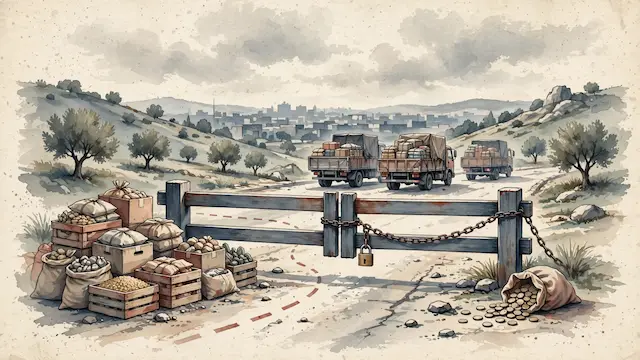
Gaza merchants have declared a strike due to threats and extortion by Hamas, which will lead to a halving of goods entering the Strip, warned Maj. Gen. Yoram Halevi, Coordinator of Government Activities in the Territories, on Wednesday, October 14. In an urgent letter to international representatives, Halevi stated that Hamas intends to blame Israel for the consequences.
The strike was reportedly triggered after Hamas security forces detained the son of a merchant who refused to pay the demanded sums. Simultaneously, direct threats against entrepreneurs refusing to comply with Hamas's demands have increased. According to information received by the IDF from merchants, Hamas is demanding approximately 10,000 shekels in cash per truck entering Gaza. Additionally, merchants are compelled to sell about 30% of their goods for cash. The military believes this method provides Hamas direct access to funds and maintains its control over trade.
These demands violate agreements for merchants operating in Gaza to conduct payments exclusively through controlled bank transfers. Reports indicate that the extortion has recently been extended to resellers, and Hamas plans to levy the fees even on drinking water supplies. The private sector accounts for roughly half of all trucks entering Gaza weekly. Under the ceasefire agreement, Israel permits approximately 600 vehicles daily, with about half for international organizations and the rest for Gaza merchants. Their work stoppage means a reduction of about 300 truckloads per day.
Halevi sent letters to Nikolay Mladenov, Director-General of the Peace Council; Maj. Gen. Jasper Jeffers, Commander of the International Stabilization Force in Gaza; and Rami Alakbar, UN Humanitarian Coordinator in the region. He urged their immediate intervention to halt Hamas's control over aid and goods imports and its use of these supplies for the organization's economic and military strengthening. Halevi placed full responsibility for the situation on Hamas, warning that the organization is using the strike to spread false accusations against Israel for creating shortages and violating the ceasefire agreement.
Three years into the conflict, Hamas continues to control Gazan life and significantly influence supply chains. The IDF acknowledged that a mechanism to deliver aid to residents bypassing Hamas has not yet been developed. Israel fears that reduced imports will intensify international criticism and undermine the legitimacy of its actions in the Strip. Meanwhile, the IDF and Shin Bet reported operations in Ramallah and Yatta against organizations allegedly serving terrorist structures under the guise of charity, arresting five terrorists linked to Hamas and the Popular Front for the Liberation of Palestine. Searches of the "Adameer" organization in Ramallah uncovered computers, documents, and checkbooks with symbols of funds linked to Hamas. The IDF claims "Adameer" is funded by terrorist money and provides legal aid to imprisoned PFLP operatives, some of whom participated in the August 23, 2019, attack that killed Rina Shnerb.
Another operation targeted the "Islamic Society for the Care of Orphans" in Yatta, declared illegal. Security forces allege it functioned as an organizational and financial arm of Hamas, transferring funds and supporting terrorist families and prisoners. Its leader and other senior staff have prior prison sentences. Arrested individuals and seized materials are under further investigation.
Mentioned
The same event, reported separately by each outlet. Open a few to compare what different newsrooms emphasize — and what they leave out.
Centre 5Right 5Haredi 2Other 2
















Not the same event — other stories that share this one’s people, places, or theme: background, reactions, and follow-ups.