Iran Rapidly Rebuilding Missile Arsenal Amidst Renewed Strikes
Translated & summarized from Mignews by baba
Western intelligence indicates Iran is rapidly rebuilding its missile and drone capabilities, maintaining production facilities despite U.S. and Israeli air attacks. Russia is reportedly supplying missiles, and a recent pause in U.S. strikes has allowed Iran to replenish its arsenals. Iran has also intensified pressure on shipping in the Strait of Hormuz and is adopting an asymmetric warfare strategy.
The story in 6 lines · by baba
- Iran is rapidly rebuilding its missile and drone arsenal despite sustained U.S. and Israeli air attacks.
- Western intelligence confirms Iran's sufficient production capacity and substantial missile reserves.
- Russia is reportedly supplying missiles, aiding Iran's arsenal replenishment.
- A pause in U.S. airstrikes has allowed Iran to regroup and resume munitions production.
- Iran has intensified attacks on commercial shipping in the Strait of Hormuz.
- Iran is adopting an asymmetric warfare strategy using missiles and allied forces.
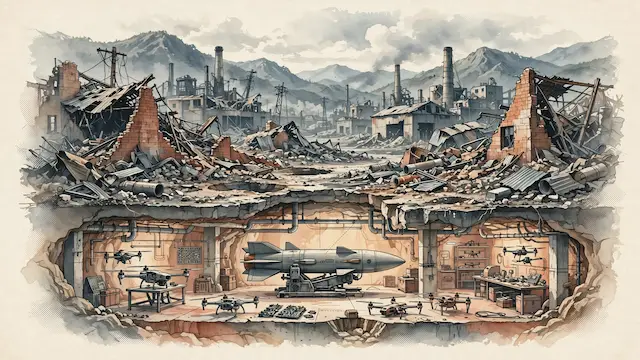
Iran has successfully maintained its ballistic missile and drone production facilities despite sustained air attacks from the U.S. and Israel, Western intelligence sources report. Tehran possesses sufficient manufacturing capabilities to replenish losses and retains a substantial inventory of anti-ship and missile weaponry. Russia is reportedly providing additional support through missile supplies, ensuring a steady replenishment of Iran's arsenals. According to Bloomberg, a temporary halt in large-scale U.S. airstrikes has allowed Iran's military leadership to regroup and establish continuous munitions production.
These assessments contrast sharply with official White House statements. Previously, President Donald Trump and Defense Secretary Pete Hegseth claimed the complete destruction of Iran's defense infrastructure and missile capabilities. White House Press Secretary Anna Kelly stated that past U.S. operations had neutralized Iran's nuclear facilities and a significant portion of its conventional defenses.
However, Western analysts suggest that the pause in U.S. operations, announced by Trump until the November midterm elections to stabilize oil prices, has created a window for Iran to restore its combat readiness. Concurrently, Iranian forces have intensified pressure on shipping in the Strait of Hormuz, with at least ten commercial vessels targeted in the past week.
Military experts note that Iran has long established dispersed depots in mountain shelters across the south of the country, leaving a significant portion of its arsenals untouched. Current assessments indicate Iran is shifting towards an asymmetric warfare strategy, focusing on inexpensive cruise missiles, anti-ship systems, and leveraging allied Houthi forces in the Red Sea.
Mentioned
The same event, reported separately by each outlet. Open a few to compare what different newsrooms emphasize — and what they leave out.
Left 1Centre 4Right 1Other 3









Not the same event — other stories that share this one’s people, places, or theme: background, reactions, and follow-ups.