Iran Retains Missile Production Capability Despite Eight Months of Attacks
Translated & summarized from Bizportal by baba
Eight months of US and Israeli attacks have damaged Iran's military industry, but intelligence suggests Tehran retains significant infrastructure for ballistic missile and drone production. President Trump's decision to pause attacks until November 3rd gives Iran time to recover and replenish its arsenal. Western assessments indicate Russia may be supplying Iran with missiles, though Moscow has not commented. Despite claims of destroying Iran's industrial base, current information points to a partial recovery of production capabilities, with key questions remaining about Iran's monthly production capacity and the timeline for reactivating damaged facilities.
The story in 6 lines · by baba
- Iran retains significant infrastructure for ballistic missile and drone production despite eight months of US and Israeli attacks.
- US President Donald Trump has paused attacks on Iran until November 3rd, allowing Tehran time to recover its military capabilities.
- Western intelligence suggests Russia may be supplying Iran with missiles, though this remains unconfirmed.
- Iran has managed to preserve some production sites and stockpiles of missiles and anti-ship weapons.
- Attacks on shipping in the Strait of Hormuz have significantly increased oil prices and tanker charter costs.
- The conflict has become a race between Iran's efforts to replenish its arsenal and the US's efforts to increase missile production.
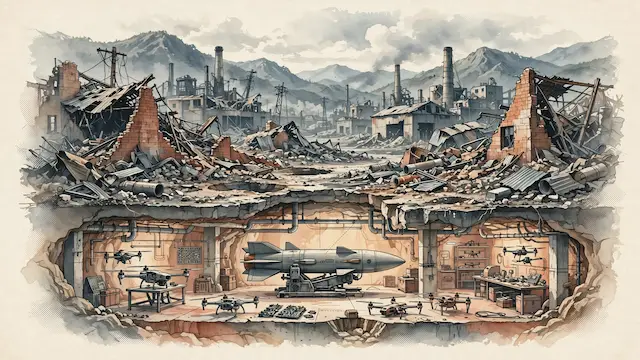
Despite eight months of American and Israeli strikes targeting Iran's military industry, which have caused significant damage to facilities and impacted the operational capabilities of the army and Revolutionary Guards, Tehran has managed to preserve substantial infrastructure for ballistic missile and drone production. Current Western intelligence assessments indicate that some factories and production sites survived, while others continue to operate at a reduced capacity. Iran also retains a stockpile of missiles and anti-ship weapons.
This development is significant for the US and Israel, as an extended pause in attacks allows Iran time to reorganize, replenish its stocks, and restore damaged capabilities. This comes as US President Donald Trump decided to halt further attacks until the November 3rd Congressional elections, stating that while the US is in talks with Tehran, military action could resume later.
Western intelligence sources estimate Iran possesses a large quantity of ballistic missiles and anti-ship missiles, with the ability to resume production using preserved infrastructure. There are also indications that Russia is supplying Iran with missiles, following similar assessments from June. The extent and nature of these Russian supplies remain unclear, and Russia has not yet commented on these claims.
These assessments contrast with recent statements from Washington. Trump had previously presented the damage to Iran's military as a major achievement, and then-Secretary of Defense Pete Hoekstra claimed in late September that the US had destroyed Iran's military industrial base. However, current information suggests a broad impact alongside preserved production and recovery capabilities.
Prior to the conflict, which began on February 28th, Israel estimated Iran held approximately 2,500 ballistic missiles. Western intelligence in June suggested Iran retained about three-quarters of its pre-war arsenal, partly due to restoration efforts. Since the conflict's start, Iran has launched over 2,000 ballistic missiles and more than 4,000 Shahed drones, highlighting its ongoing need for production.
Security experts believe the joint US-Israeli offensive severely damaged some of Iran's original production capacity, particularly for advanced missiles. However, Iran has developed a network of fortified facilities, dispersed production sites, and underground tunnels, some designed for prolonged aerial attacks. Last month, it was reported that Iran had resumed limited ballistic missile production using pre-war components, with assembly continuing in underground facilities. The ability to assemble missiles from existing parts may expedite arsenal recovery.
Iran's remaining capabilities also affect the Strait of Hormuz, where at least ten ships have been attacked recently, demonstrating Iran's ability to threaten vessels in wider Gulf areas. Anti-ship missiles, some based on older, simpler-to-produce models, are particularly relevant. The combination of remaining missile stocks, affordable drones, and the ability to attack tankers has significantly impacted oil prices, with Brent crude rising to around $105 per barrel and daily tanker charter costs reaching $1.2 million, a more than twentyfold increase reflecting the heightened risk.
Developments in Yemen, where Houthi rebels with Iranian ties have intensified attacks on Saudi Arabia, also pose a risk to Red Sea export routes. Militarily, this is a race between Iran's efforts to replenish its missile and drone stocks and the US's attempts to rapidly increase its production of interceptors and missiles. US arms factories face large orders and extended production times for advanced systems.
The time until the US elections may allow Iran to continue restoring facilities, moving stocks to protected sites, and expanding assembly operations. However, the damage to its missile industry remains significant. The key questions for Israeli and US intelligence are how many missiles Iran can add to its inventory monthly and how long it will take to reactivate damaged factories.
Mentioned
The same event, reported separately by each outlet. Open a few to compare what different newsrooms emphasize — and what they leave out.
Centre 4Right 1Other 2







Not the same event — other stories that share this one’s people, places, or theme: background, reactions, and follow-ups.