
Iran Rebuilding Missile Factories Despite US Strikes, Report Claims
Translated & summarized from Israel Hayom by baba
Iran has maintained its missile and drone production capabilities despite U.S. and Israeli strikes, according to a Bloomberg report citing Western officials. These findings contradict President Trump's claims of Iran's military destruction. Iran is reportedly using a lull in U.S. attacks before the midterm elections to rebuild its arsenal and increase asymmetric activities. The ongoing regional conflict is also impacting global oil prices and has led to deadly Houthi attacks in Saudi Arabia.
The story in 6 lines · by baba
- Iran has preserved its missile and drone factories despite U.S. and Israeli bombing, a report claims.
- Western officials state Iran retains the ability to produce weapons and is well-equipped with missiles.
- Russia is reportedly supplying missiles to Iran, according to a Western source.
- The findings contradict President Trump's assertions that Iran's military and defense industry were destroyed.
- Iran is using a pause in U.S. attacks before the midterm elections to rebuild its forces.
- Regional escalation has driven oil prices above $100 per barrel and led to deadly attacks in Saudi Arabia.
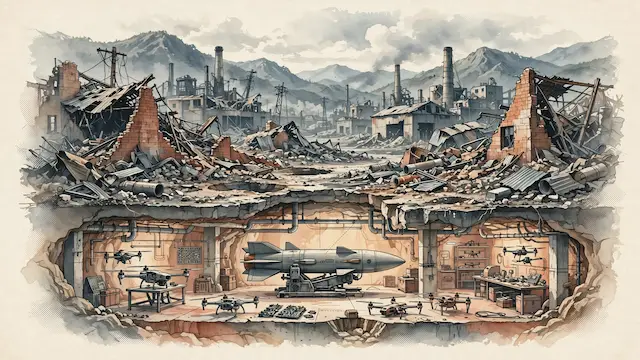
Iran has managed to preserve its missile and drone factories despite months of bombing by the United States and Israel, according to a Bloomberg report citing Western officials familiar with the matter. Tehran reportedly retains the capability to produce weapons and rebuild its arsenal, remaining well-equipped with ballistic missiles and anti-ship weapons. The report also suggests Russia is supplying missiles to Iran, aligning with earlier assessments, though the Russian Defense Ministry declined to comment. These intelligence assessments directly contradict statements made by President Donald Trump and his administration, who claimed earlier this year that Iran's military was destroyed and its defense industry and missile capabilities eliminated. Western officials had previously boasted about operations "Midnight Hammer" and "Furious Rage," which they asserted destroyed Iran's nuclear facilities and missile defense systems.
Iran appears to be exploiting a political window in the U.S., as Trump recently announced that the U.S. would not attack Iran before the upcoming midterm elections in November, likely to prevent a surge in oil prices. This pause in strikes, according to Bloomberg, grants Iran valuable time to rebuild its forces for future conflict, coinciding with increased asymmetric activity in the Strait of Hormuz, where at least ten ships have been attacked in the past week.
Intelligence estimates suggest Iran possessed approximately 2,500 ballistic missiles before the conflict began. Since late February, Iran has launched over 4,000 Shahed drones and at least 2,000 ballistic missiles. While the bombing campaign has impacted Iran's long-term production capacity, Western intelligence officials estimated in June that Iran still retained about three-quarters of its pre-war ammunition. Experts note that Iran has stockpiled cruise missiles for years, hiding them in natural shelters in its southern mountains.
The regional escalation and disruption of shipping lanes are impacting the global economy and energy market, with oil prices trading above $100 per barrel and tanker charter costs soaring to unprecedented levels. Simultaneously, the conflict between Saudi Arabia and Iran-backed Houthi rebels continues, with Houthi ballistic missile attacks on two Saudi airports resulting in at least three deaths and dozens of injuries, raising questions about the Kingdom's ability to rely on alternative export routes.
Mentioned
The same event, reported separately by each outlet. Open a few to compare what different newsrooms emphasize — and what they leave out.
Centre 4Right 1Other 2







Not the same event — other stories that share this one’s people, places, or theme: background, reactions, and follow-ups.