
Iran Retains Missile and Drone Capabilities Despite Attacks, Report Says
Translated & summarized from Hamal by baba
Iran has maintained its missile and drone production capabilities despite ongoing U.S. and Israeli attacks, according to a Bloomberg report citing Western officials. President Trump's administration had claimed these strikes severely degraded Iran's military capacity. However, the White House disputes these new assessments, stating that U.S. operations dismantled Iran's defense systems. The lull in attacks allows Iran to rebuild, while its recent actions have increased shipping attacks in the Strait of Hormuz.
The story in 6 lines · by baba
- Iran has preserved its missile and drone factories despite U.S. and Israeli attacks, enabling weapons replenishment.
- Western officials cited in a Bloomberg report suggest Iran can rebuild its military reserves.
- U.S. President Donald Trump's administration had previously claimed strikes crippled Iran's military capabilities.
- The White House disputes the report, asserting U.S. operations dismantled Iran's defense infrastructure.
- A pause in U.S. strikes allows Iran to recover, while shipping attacks in the Strait of Hormuz have increased.
- Iran has launched over 4,000 drones and 2,000 ballistic missiles since February 28, according to analysis.
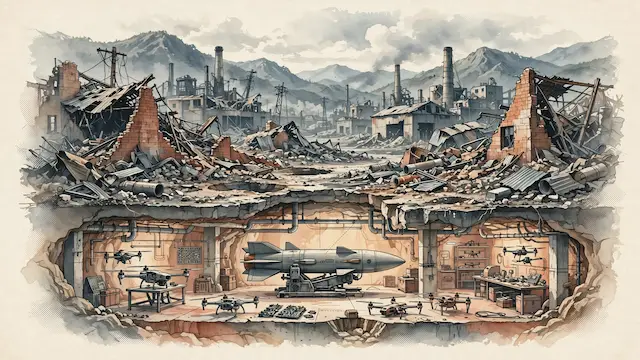
Iran has managed to preserve its missile and drone manufacturing facilities despite months of American and Israeli strikes, enabling it to replenish its weapons stockpiles, according to a Bloomberg report citing Western officials familiar with assessments. This comes as U.S. President Donald Trump announced he would not attack Iran before the November midterm elections. These officials, who requested anonymity, stated that Tehran retains the capacity to produce weapons and rebuild its reserves. One official noted that Iran possesses a substantial inventory of ballistic missiles and anti-ship weapons, which it can rapidly expand. This same official also indicated that Russia is supplying Iran with missiles, though the Russian Ministry of Defense did not respond to a request for comment.
The assessments contradict statements from Trump and his administration officials, who claimed that eight months of strikes had critically damaged Iran's ability to threaten U.S. bases in the region and its allies. Trump had previously asserted that the Iranian military was completely destroyed, and then-Secretary of Defense the Secretary of Defense stated on September 30 that the U.S. had eliminated Iran's military production capabilities and security infrastructure.
The White House, however, rejected these assessments. Spokesperson Anna Kelly stated that following the destruction of Iran's nuclear facilities in Operation "Midnight Hammer" last year, Operation "Eldest Fury" successfully dismantled the conventional defense systems Iran was building around its nuclear program, including ballistic missiles, production facilities, and naval forces.
According to the report, the pause in extensive American attacks is allowing Iran time to recover and prepare for further conflict. Concurrently, Tehran has intensified its attacks on shipping in the Strait of Hormuz, with the British Navy reporting at least ten vessels damaged in the past week. Western assessments suggest Iran retains sufficient firepower to retaliate if Washington resumes its strikes.
However, a report by Jim Lemson, a former CIA analyst now at King's College London, estimated that the American-Israeli air campaign likely severely damaged a significant portion of Iran's pre-war missile production capacity. Israel had estimated that Iran possessed approximately 2,500 ballistic missiles before the war, but the current number remaining is unknown. An analysis by Bloomberg Economics, based on public data, indicated that Iran has launched over 4,000 Shahed-model attack drones and at least 2,000 ballistic missiles since the conflict began on February 28. Beka Vaser, Head of Security at Bloomberg Economics, believes the pause allows Iran to rebuild its forces and could lead to a prolonged conflict with no clear advantage for either side. Siddharth Kaushal, a Senior Fellow at the British think tank RUSI, suggested that Iran's inventory of anti-ship missiles likely remains substantial due to their relatively simple production and the mountainous terrain in southern Iran offering natural cover from air attacks. He added that the primary challenge in attacking commercial shipping is likely obtaining the necessary intelligence to locate targets.
Mentioned
The same event, reported separately by each outlet. Open a few to compare what different newsrooms emphasize — and what they leave out.
Centre 4Right 1Other 2







Not the same event — other stories that share this one’s people, places, or theme: background, reactions, and follow-ups.