Eitan Gafni on Making His Debut Film, 'Cannon Fodder'

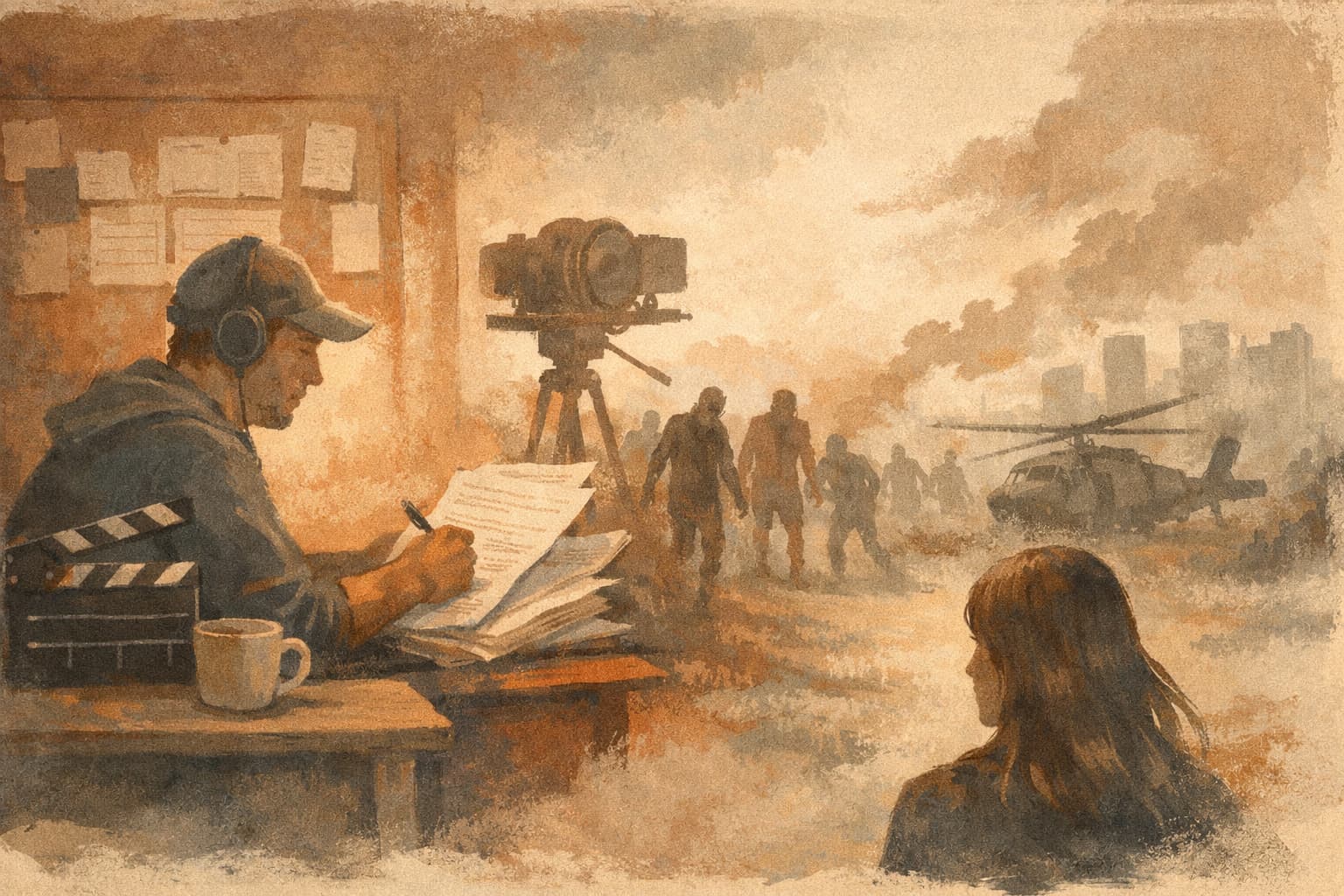
In this interview for Srugim’s “My First Film, Director’s Version” project, filmmaker Eitan Gafni explains how his debut feature, “Cannon Fodder,” came together almost by chance. He says he first developed a different, more complicated script, “Autumn Children,” with screenwriter Daniella Danziger-Zeitman, but realized one morning it was too ambitious for a first feature. He then pitched his partner, later wife Yifat Shalev, a lower-budget action idea about Israeli fighters facing zombies, and she encouraged him to write it.
Because he also needed a graduation film for Tel Aviv University, Gafni submitted a short zombie script, but the university rejected it. He and friends, led by cinematographer Roy Keren, then shot a 7-minute teaser about soldiers fighting zombies. That teaser helped him refine the eventual feature and his creative direction. Writing the first draft took about two months, and the full process, including six more drafts and script editing, took roughly six months while he researched makeup effects and low-budget action production.
Gafni says the script was repeatedly rejected by film funds, but two reviews were positive enough that he forced a meeting with fund managers and argued for support. He eventually received a small script-development grant, then worked with Amitt Lior, chairman of the Screenwriters’ Guild at the time, on the rewrite. With Yifat Shalev and partner Tom Goldwasser, he formed the production company Hof Lavan, raised enough money to shoot, and later secured a “guerrilla production grant” that covered post-production after the film passed all review stages.
He says the cast was largely written into the script, including Shalev as Noel, Goma Sarig as Avner, Liron Levo as Doran, Roy Miller as Daniel, Amus Eino as Motti, and Amitt Lior as Commander Gidi. Hundreds of extras, many of them friends and family, joined the large action scenes, and Gafni himself played four different zombies. He describes the set as exhilarating and says the film was technically complex, with heavy makeup, many locations, and large-scale action.
Looking back, Gafni says the film’s reception in Israel was mixed, with some older viewers confused by the zombie genre, but the first local screening at the Shderot Festival was packed and enthusiastic. Internationally, screenings at events including FrightFest in London and a genre festival in Puerto Rico were warmly received. He recalls a Miami screening where one side of the audience called it right-wing nationalist propaganda and another called it left-wing propaganda, which he found amusing. For him, the film became a step in a broader creative path focused on trauma in Israeli life, and it taught him not only that he is a director, but that he is fundamentally a storyteller.

