China Extends Maritime Pressure Deep Into the Pacific, Raising Western Alarm

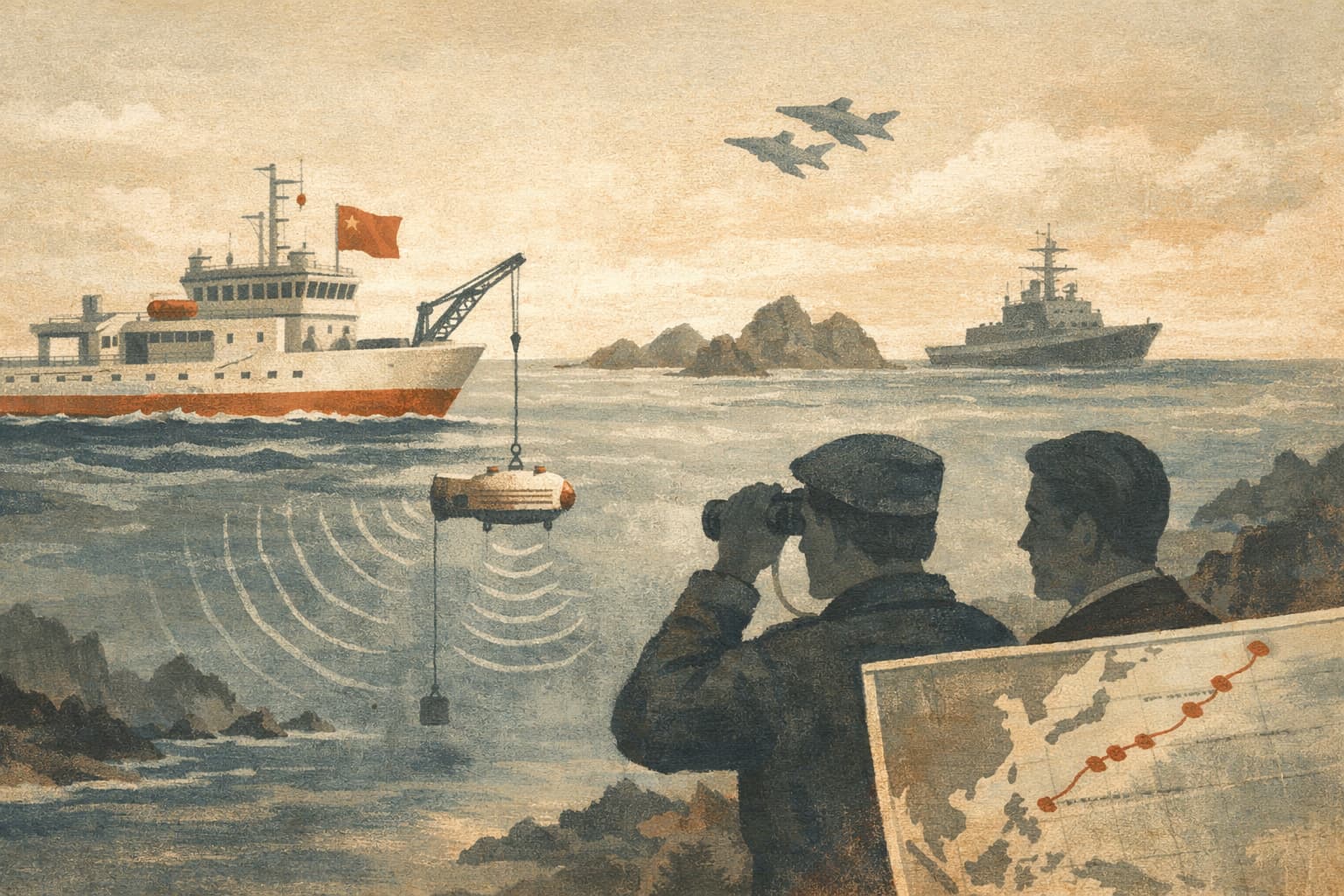
China has carried out an unusual series of maritime moves that pushed its civilian enforcement and research vessels beyond the so-called First Island Chain and, for the first time, mapped the seabed east of Taiwan. The article, published Thursday by CNN, says the activity marks Beijing’s furthest-ever extension of maritime law-enforcement operations from its shores and is being seen by analysts as a sophisticated “gray zone” campaign designed to create facts on the ground without open warfare.
The moves came shortly after U.S. President Donald Trump visited Beijing. Although the visit was described as friendly, Chinese leader Xi Jinping made clear that Taiwan remains the most sensitive issue in ties between the two powers. Soon afterward, three ships from China’s Maritime Safety Administration crossed the Bashi Channel and began mapping and patrols east of Taiwan, outside the First Island Chain for the first time. Stanford’s SeaLight director Ray Powell called it a “Bashi breakthrough,” saying it was the first time China had conducted sovereignty patrols beyond its historic nine-dash line. Chinese state media portrayed the operation as a “statement of sovereignty with legal significance and a political signal.”
Taiwanese President Lai Ching-te said Beijing’s real aim is expansion and that China’s threats to Taiwan “know no limits.” Security officials in Taipei warned that using civilian ships is more dangerous in the long run than military drills because it appears less threatening while gradually changing the status quo. They fear a “snakelike strangulation” stage in which Chinese ships could begin legally stopping commercial vessels carrying liquefied natural gas to Taiwan, which depends almost entirely on energy imports, effectively squeezing the island economically.
The seabed mapping also has direct military value, improving Chinese submarine operations and revealing sensitive information about undersea cables. The actions have alarmed Western governments. The U.S. State Department called them “deeply destabilizing,” and Britain, France and Germany issued a rare joint statement expressing concern about the activity east of Taiwan.
China is also continuing pressure in the South China Sea, especially around Scarborough Shoal, which it effectively controls but lies in the Philippines’ exclusive economic zone. Manila is worried that floating structures placed there under the cover of “scientific research” could be the start of another permanent military base. In response, the U.S. embassy in Manila announced the transfer of four maritime drones worth $13 million to the Philippine military to improve surveillance and response capabilities.
Not the same event — other stories that share this one’s people, places, or theme: background, reactions, and follow-ups.


