
Fruit and vegetable prices fall as supermarket competition intensifies
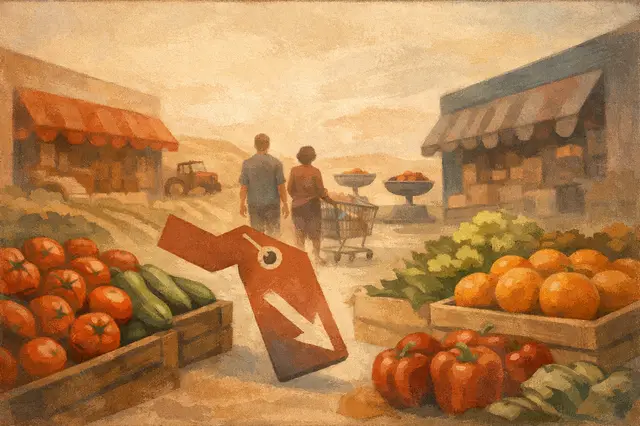
Fruit and vegetable prices in Israel have recently been moving between one-off discounts and broad supermarket promotions, driven by strong supply and sharper competition. The trend is most visible in summer produce, where shoppers are seeing lower prices on some items but also significant differences between chains for a full basket.
The article says this year’s crops are abundant and of good quality, which has increased supply and pushed retailers to compete for customers. Examples cited include watermelon from 1.90 shekels, a bag of carrots for 1 shekel at Victory, zucchini for 2.90 shekels at Rami Levy, red cabbage for 3.90 shekels at several chains, and melon for 1.90 shekels at Victory.
Using the Pricez comparison site, the report found that Rami Levy was the cheapest chain for a fruit-and-vegetable basket, at 562.02 shekels. Victory was the most expensive, at 721.42 shekels, a gap of 28%.
The article attributes the lower prices to improved agriculture over the past two years, more foreign workers in agriculture and in supermarket supply chains, and the dollar exchange rate, which makes imports cheaper. Since not all fruit and vegetables are grown in Israel, imports also help shape prices. It adds that demand has increased too, with more Israelis staying home in recent months because of the security situation. The piece concludes that although food prices are finally easing in some categories, consumers still need to compare prices carefully because a shopping basket can still cost hundreds of shekels.



