
UK Tightens Export Controls on Defense Goods to Israel
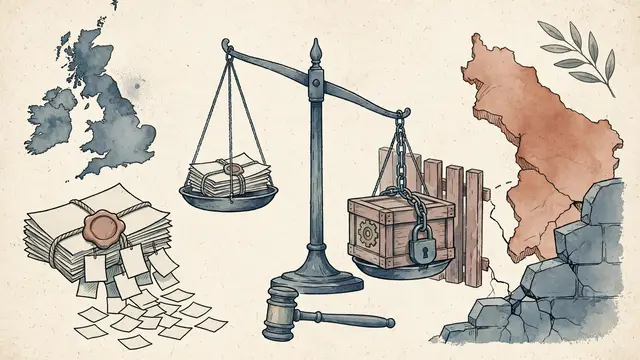
The United Kingdom has significantly tightened restrictions on defense exports to Israel, canceling or freezing over 80 export licenses for military items. These measures encompass both weapons components and goods that could be utilized by the Israel Defense Forces (IDF). According to Stephen Doughty, the UK's Minister of State for the Middle East, over 30 licenses have been revoked and 50 new applications denied since the restrictions were implemented in September 2024. Doughty stated that the government has effectively "put a double lock on arms exports," emphasizing that beyond adhering to international law, the "illegal nature of the occupation" is now a primary consideration for license approvals. He personally reviews each application to ensure exported goods are not used in Gaza.
Doughty addressed concerns that the government, under Prime Minister Keir Starmer, is still arming Israel, clarifying that approved exports include items like cystic fibrosis treatments and body armor for journalists and NGOs. He acknowledged that components for F-35 fighter jets, which could be used by the IDF, are still supplied, though direct export of F-35 parts to Israel has ceased. Instead, these parts are sent to the U.S. as part of a global program, a move Doughty considers vital for British and allied security.
However, not all within the Labour Party agree with the current approach. Emily Thornberry, Chair of the House of Commons Foreign Affairs Committee, suggested that British-made components should not be used by the IDF and proposed marking them as "Not for use in Israel" when sent to the U.S., citing a precedent with Dutch components.
These export controls were introduced in September 2024, when then-Foreign Secretary David Lammy announced they covered 350 types of export goods. Doughty's remarks coincided with a strong anti-Israel speech by current Foreign Secretary Ed Miliband at the Labour Party conference in Liverpool. Miliband condemned the "suffering of Gazans and West Bank residents," pledged to ban imports from Israeli settlements in the West Bank, and vowed to prevent British firms from participating in settlement activities, stating, "We will not let you destroy the two-state solution."
Additionally, Home Secretary Shaban Mahmood announced the revival of a state refugee resettlement program, allocating approximately 25% of places to Palestinian refugees and women and girls from Afghanistan, with initial arrivals expected by year-end.
The same event, reported separately by each outlet. Open a few to compare what different newsrooms emphasize — and what they leave out.















Not the same event — other stories that share this one’s people, places, or theme: background, reactions, and follow-ups.


Ask About This Article
Duki reads it, and every newsroom on the same story, then answers with sources.