
Fuel Prices Set to Climb Again Despite Recent Tax Cut
Translated & summarized from Globes by baba
Fuel prices in Israel are expected to rise by approximately 35 agorot per liter, potentially surpassing 8 shekels, despite a recent excise tax cut. The increase is driven by global oil price hikes due to geopolitical tensions and refining shortages.
The story in 5 lines · by baba
- Fuel prices in Israel are projected to increase by 35 agorot this week.
- The price is expected to cross the 8 shekel per liter threshold again.
- A recent excise tax cut had temporarily lowered prices to 7.75 shekels.
- Global factors like the Persian Gulf crisis and Russian refinery damage are cited.
- Economists question the effectiveness of the excise tax reduction policy.
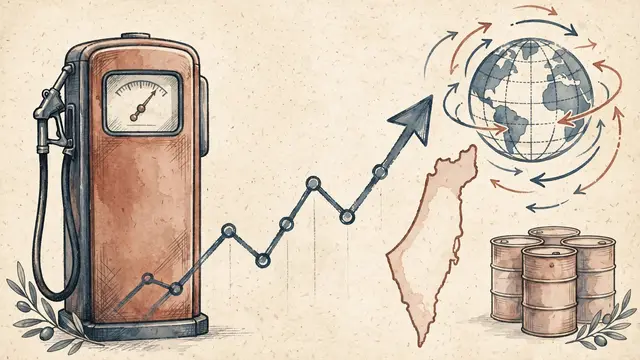
Despite a recent reduction in excise tax that lowered the price of gasoline, Israeli fuel costs are expected to rise again this week, potentially exceeding 8 shekels per liter for 95-octane fuel. The price had previously dropped to 7.75 shekels per liter from a high of 8.25 shekels following Finance Minister Bezalel Smotrich's decision to subsidize the excise tax.
The anticipated increase, estimated at around 35 agorot, is attributed to a deepening global oil crisis. Chen Herzog, chief economist at BDO, explained that rising international oil prices are driven by the escalating crisis in the Persian Gulf, impacting the Houthi situation, and ongoing global refining capacity shortages. These shortages are exacerbated by the closure of the Strait of Hormuz, the war in Ukraine, and damage to refineries in Russia.
While the excise tax reduction was intended to mitigate costs, Herzog noted its limited effectiveness against global market trends. He pointed out that the price of a barrel of oil recently surpassed $100, nearing peaks seen during past conflicts. Herzog described this as a "triple market failure" in the global oil market, involving the Strait of Hormuz, the Houthis, and Ukrainian attacks on Russian infrastructure.
Herzog further commented that the current price hike highlights the ineffectiveness of the excise tax reduction policy. He stated that the government is forced to subsidize the tax cut from other sources, ultimately at the public's expense, without altering the overarching global trends influencing fuel prices. The previous price increase in September had matched an all-time high recorded in 2012.
The same event, reported separately by each outlet. Open a few to compare what different newsrooms emphasize — and what they leave out.
Centre 3Right 5Haredi 2Arab 2Other 6
















