
Dozens of Israelis Stranded in Nepal Amid Severe Flooding and Landslides
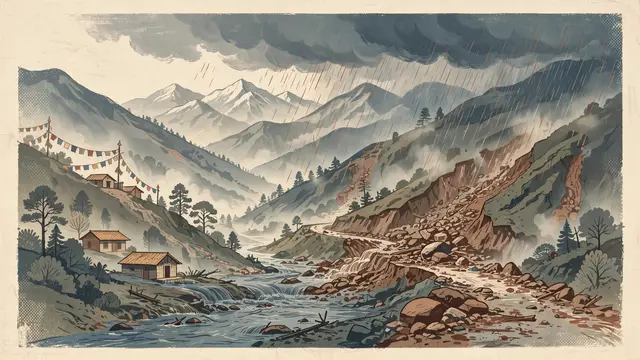
Dozens of Israeli travelers are stranded in the Himalayan village of Samagaon, Nepal, at an altitude of 3,500 meters, following severe flash floods and rockslides that have blocked access to the area. The Israeli Ministry of Foreign Affairs in Jerusalem stated that Israeli tourists are in mountainous regions that are currently extremely difficult to access, with some losing contact. The Israeli embassy in Nepal is coordinating with local tour companies and guides to locate Israelis who have not yet been reached and to provide assistance where possible, given the terrain, in efforts to move them to safer areas.
Meanwhile, northern India's Uttar Pradesh state recorded 66.5 mm of rain between September 25 and the morning of September 27, significantly exceeding the average of 7.6 mm for this period. In India, floods have resulted in 56 deaths, 46 injuries, and damage to over 1,000 homes, with rescue operations underway. Nepali villagers are seen carrying their belongings while fleeing the floods.
Authorities in Nepal have issued flash flood warnings for 49 of the country's 77 districts as river levels continue to rise. While Rasuwa and Nuwakot districts, previously hit by deadly floods last month that killed over 1,450 people, are on alert, they are not currently considered high-risk areas. Power supply has been completely disrupted in the Manang, Mustang, Myagdi, and Baglung districts, with efforts to restore electricity ongoing. Flooding of the Rahughanga River damaged infrastructure and transmission towers for a 40-megawatt hydroelectric project.
In a separate incident in Nepal, ten local workers are missing after an avalanche buried the base camp of the 7,126-meter Himlung Himal mountain in the northern Manang district. The workers were setting up tents for foreign climbers who were not present at the time of the avalanche. In India, the Central Water Commission reported that 30 river monitoring stations across seven states indicated a 'serious situation,' with several major rivers, including the Ganges, Gandak, Kosi, Bagmati, and Narmada, at their highest danger levels.
The same event, reported separately by each outlet. Open a few to compare what different newsrooms emphasize — and what they leave out.



















Not the same event — other stories that share this one’s people, places, or theme: background, reactions, and follow-ups.

Ask About This Article
Duki reads it, and every newsroom on the same story, then answers with sources.