Israel's Water Supply Stabilizes After Desalination Plant Disruptions
Translated & summarized from Cursorinfo by baba
Israel's Energy Minister declared an end to a water crisis caused by the shutdown of five desalination plants due to a rare natural phenomenon. While water supply to homes and agriculture has been restored, some plants are not at full capacity, and the Sea of Galilee faces critical low levels.
The story in 6 lines · by baba
- Israel's water crisis is over, according to the Energy Minister.
- Five desalination plants were shut down due to a rare natural event.
- Water supply to homes and agriculture has been restored.
- Some desalination plants are still operating at reduced capacity.
- The Sea of Galilee faces critical low water levels.
- Herbicides near Ashkelon are deemed non-hazardous.
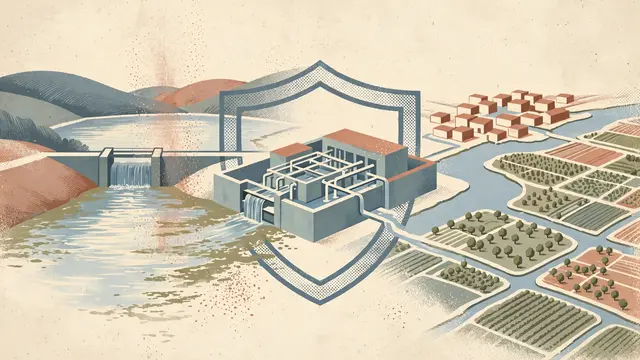
Israel's Energy Minister Eli Cohen announced an end to the water crisis that arose after five desalination plants were temporarily shut down. According to Walla News, Cohen stated that the national water supply system is functioning stably, with water delivery to both the public and agricultural sectors fully restored. The minister attributed the disruptions to a rare natural phenomenon not seen in approximately 30 years, noting that authorities managed to maintain uninterrupted supply to homes and quickly resume agricultural deliveries.
Despite the minister's assurances, the full operational status of all desalination facilities has not been confirmed. Currently, only the Hadera plant is operating at full capacity, while Sorek 1 and Palmahim are at 50% capacity. Mekorot, the national water company, has quadrupled its water intake from the Sea of Galilee, but the lake's low levels risk reaching a critical point where further extraction will be impossible.
Yechiel Lifszyc, head of the Water Authority, assured the public that herbicides dispersed near Ashkelon pose no health risk and rated his agency's performance an 8 out of 10, deferring questions about a fishing ban to the Ministry of Health. He also mentioned that the Ministry of Health has temporarily permitted the use of previously closed artesian wells, which will be deactivated once the desalination plants are fully restored.
The article notes that neither the Energy Ministry nor the Water Authority has declared a complete resolution to the water crisis or the full restoration of all desalination plants. Previously, the crisis was exacerbated by the rapid spread of microscopic algae along the coast, leading to increased water shortages.
Mentioned