
Israel's Water Supply Stabilizes After Desalination Plant Disruptions
Translated & summarized from JDN by baba
Israel's water supply has stabilized following disruptions at desalination plants, with authorities assuring residents and farmers of uninterrupted service. Measures taken included dynamic facility operation, increased flow from the Sea of Galilee, and well activation, while water safety and environmental monitoring are ongoing.
The story in 5 lines · by baba
- Israel's water supply is stable after desalination plant issues.
- Uninterrupted water flow to residents and agriculture is assured.
- Desalination facilities were damaged, causing initial supply concerns.
- Water safety for consumption and bathing has been confirmed.
- Environmental monitoring and a temporary fishing ban are in place.
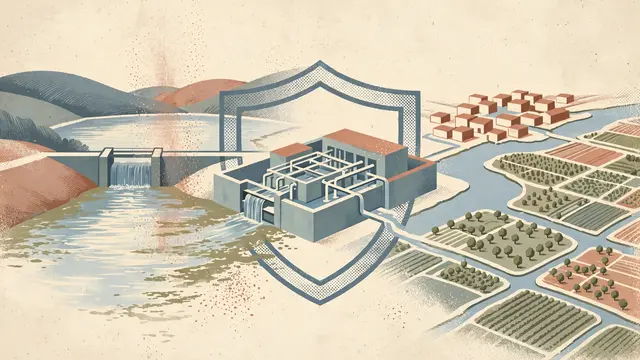
Israel's Ministry of Energy and Infrastructure and the Water Authority announced on Friday that the country's water economy has fully stabilized, ensuring uninterrupted supply to residents and the agricultural sector. The announcement came after an assessment meeting, following concerns of disruptions due to damage to desalination facilities.
Supply continuity was maintained through dynamic operation of the facilities, increased water flow from the Sea of Galilee, and the activation of hundreds of wells nationwide. As consumption is expected to decrease over the weekend, national water company Mekorot will continue to extensively replenish the national reservoirs to guarantee full supply and maximum redundancy for the upcoming week.
Officials emphasized that drinking water is completely safe for consumption and all domestic uses, with no health risks. Regarding the treatment process at sea, they stated that the localized dispersal of permitted substances was approved by an inter-ministerial committee led by the Ministry of Environmental Protection and the Ministry of Health. Professional sources confirmed these substances pose no danger to swimmers.
Environmental monitoring is ongoing in the area, with results expected later. The localized fishing ban imposed by the Ministry of Health in the treatment zone is a precautionary measure and will remain in effect until monitoring results are received. Fish marketed to the public and bathing beaches have been declared safe.
Teams from the Water Authority, Mekorot, and the Ministry of Energy are continuing to manage the situation around the clock to maintain supply continuity and water economy stability.
Mentioned








