Water Crisis Highlights Need for Local Authority in Israel
Translated & summarized from Ynet by baba
Israel is experiencing a severe water shortage due to desalination plant shutdowns caused by algae blooms. The crisis highlights the effectiveness of local water authorities and the need for greater municipal control over water resources, including more local wells.
The story in 5 lines · by baba
- Israel's water supply is threatened by desalination plant shutdowns due to algae.
- The crisis reveals the need for diversified water sources beyond desalination.
- Local municipalities proved more effective than national bodies in managing the crisis.
- The article advocates for transferring more water management authority to local governments.
- Diversified water sources, like local wells, are crucial for resilience.
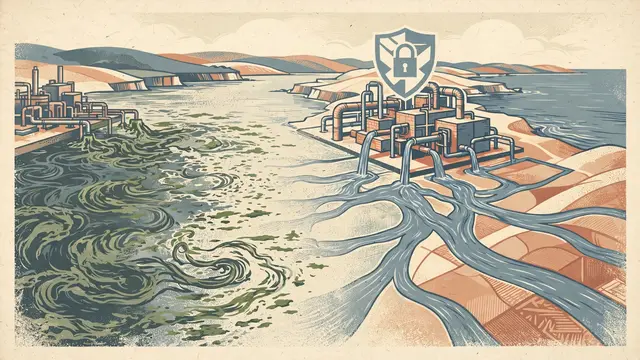
Israel is currently facing a significant water crisis due to the shutdown of most of its desalination plants, a situation exacerbated by an unusual weather event causing a surge in microscopic algae in seawater. These algae have overwhelmed the desalination facilities, which were not equipped to handle them, leading to a disruption in the water supply. This reliance on a single primary water source, desalination, is a fundamental flaw, according to water management officials who had prepared for potential cyberattacks but were caught off guard by the natural phenomenon.
The crisis underscores the effectiveness and speed of municipal water authorities, which responded quickly to inform and manage the situation for residents. In contrast, national water bodies were still assessing the event. The article argues that this demonstrates the need to transfer more authority from the central government to local municipalities in water management.
ראשון לציון, a major city, provides an example of how diversification of water sources can mitigate such crises. Approximately 45% of the city's water comes from local groundwater wells, while the remaining 55% is largely desalinated water. This mix allowed ראשון לציון to continue supplying water to its residents even as desalinated water supplies dwindled. The city's mayor, Raz Kin'stlich, noted that the municipality had prepared for various scenarios, including temporary water shutoffs and the opening of distribution stations.
Kin'stlich also highlighted the municipality's long-standing request to drill more wells for natural drinking water, a request often hindered by the Ministry of Health, even for wells designated for emergencies. The current crisis, he stated, further emphasizes the necessity of these local wells and greater local autonomy in water source development to better prepare for future water emergencies.