
Micro-Algae Bloom Disrupts Israel's Desalination Plants, Threatening Water Supply
Translated & summarized from Srugim by baba
A large bloom of micro-algae originating from Egypt has forced the shutdown of most of Israel's desalination plants, jeopardizing the country's water supply. The algal bloom is exacerbated by climate change and pollution, and Israel is urged to adopt advanced technological solutions to prevent future disruptions.
The story in 5 lines · by baba
- Micro-algae bloom from Egypt has shut down most Israeli desalination plants.
- This threatens Israel's water supply, as 80% comes from desalination.
- Climate change and pollution worsen these algal bloom events.
- Similar incidents have occurred in the US and Persian Gulf nations.
- Israel needs advanced technology to combat this environmental threat.
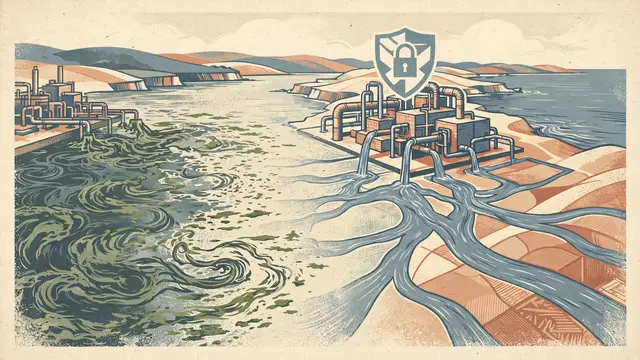
A massive bloom of micro-algae, carried by currents from Egypt's Nile Delta, has shut down most of Israel's desalination plants, raising concerns about the nation's water supply. This phenomenon, known as an algal bloom, is exacerbated by rising water temperatures and agricultural fertilizer runoff, causing the microorganisms to multiply rapidly.
The dense algal masses can easily penetrate filtration systems, threatening to clog and disable the delicate membranes essential for desalination. This poses a significant risk to Israel, where approximately 80% of its drinking water is produced through desalination.
Similar incidents have occurred globally. In the United States, toxic algal blooms in Lake Erie led to the shutdown of drinking water intake, leaving hundreds of thousands in Toledo, Ohio, without tap water. Persian Gulf nations, heavily reliant on desalination, regularly contend with "red tides" that force immediate plant closures to prevent equipment damage and toxin contamination.
Climate change, which is increasing ocean temperatures, is transforming these algal blooms from sporadic natural events into a global strategic threat to water and food security. While Israel has focused on preparing for cyberattacks, missile strikes, and oil spills, this environmental crisis highlights the need for advanced technological solutions.
Globally, "pre-treatment" methods are being adopted, including injecting coagulants and using air bubbles to float algae to the surface for removal before they reach sensitive water facilities. Israel must now prioritize similar technological advancements to combat the green tide and ensure a continuous water supply.







