
Israel Faces Severe Water Crisis as Desalination Plants Shut Down
Translated & summarized from Walla by baba
Israel is experiencing a severe water crisis due to the shutdown of five major desalination plants, impacting drinking water and agriculture. Farmers, especially in the south, face significant crop losses as water supplies are halted, prompting urgent calls for government intervention and compensation.
The story in 5 lines · by baba
- Five of Israel's six desalination plants are down, causing a major water shortage.
- Pumping from the Sea of Galilee is at maximum, but levels are critically low.
- Farmers, particularly in the south, face immediate crop loss risks.
- Agricultural leaders are demanding government intervention and compensation.
- Algae from the Nile may be contributing to the desalination plant issues.
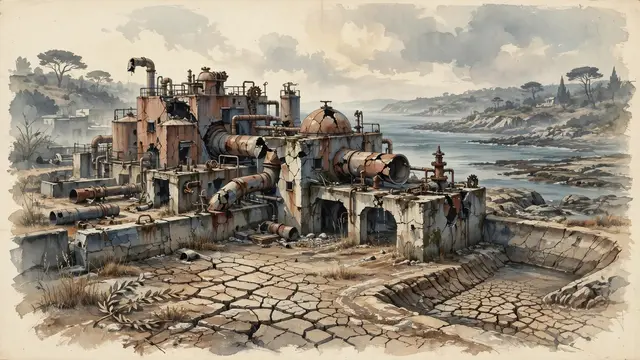
Israel is grappling with a significant water shortage after five out of six national desalination plants ceased operations for 24 hours, impacting both drinking water supplies and agricultural irrigation. The country relies heavily on desalinated water, which accounts for approximately 70% of its total water consumption. To mitigate the immediate deficit, the Water Authority instructed Mekorot, the national water company, to increase pumping from the Sea of Galilee to its maximum capacity. However, this measure is constrained by the Sea of Galilee's low water level, which has fallen below the "red line" due to two consecutive dry winters. In parallel, previously closed water wells have been reopened to maximize extraction, with Mekorot personnel working around the clock to compensate for the shortfall from the desalination facilities.
The Water Authority has deemed the situation "unusual" and is investigating potential causes, including recent stormy seas and a large influx of algae from the Nile region, based in part on satellite imagery analysis. The algae's microscopic size could potentially infiltrate and clog the desalination plant filters. The most severely affected are farmers in southern Israel, particularly in the Ramat Negev Regional Council near the Egyptian border. The halt in water supply has put an estimated 20,000 dunams of vegetable crops, valued at approximately 2 million tons, at immediate risk for dozens of farmers.
In response to the crisis, agricultural leaders Amit Yifrah and Orr Dorman urgently appealed to Finance Minister Bezalel Smotrich, Agriculture Minister Avi Dichter, and Energy Minister Eli Cohen. They warned that the disruption to water supply, occurring during the crucial growing season, jeopardizes food security and threatens hundreds of family farms with irreversible damage to crops and orchards just before harvest. The agricultural leadership is demanding immediate government intervention, an emergency discussion to formulate operational decisions, and a compensation plan for affected farms, emphasizing that while prioritizing drinking water is understood, agriculture cannot be left without water or certainty.
Mentioned
The same event, reported separately by each outlet. Open a few to compare what different newsrooms emphasize — and what they leave out.
Left 1Centre 3Right 2Haredi 2Other 1







