
Israel Launches New Tender for Cheaper Imported Yellow Cheese
Translated & summarized from Davar by baba
Israel's Ministry of Economy and Industry is launching a new tender to import 5,900 tons of yellow cheese for 2027, aiming to reduce consumer prices. Previous tenders have led to significant price drops, with imported cheese costing substantially less than domestic brands. The ministry will monitor retail chains to ensure savings are passed on to consumers, while local dairies are adapting by focusing on premium products or importing themselves.
The story in 5 lines · by baba
- Israel plans to import 5,900 tons of yellow cheese in 2027 via a new duty-free tender.
- The tender aims to lower consumer prices, with imported cheese costing significantly less than domestic brands.
- Previous tenders have resulted in savings of up to 22 shekels per kilogram for consumers.
- The Ministry of Economy will monitor retail chains to ensure price reductions reach consumers.
- Local dairies are responding to increased import competition by focusing on premium products.
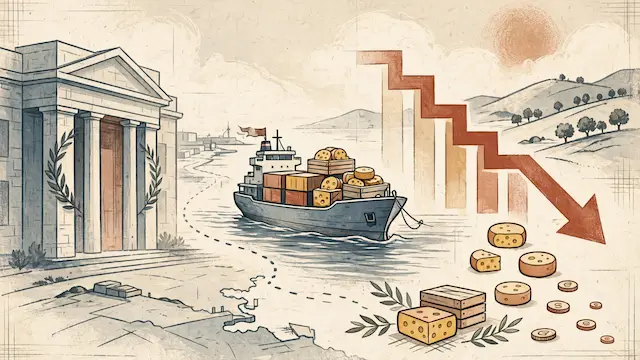
Israel's Ministry of Economy and Industry has announced a new competitive tender to import 5,900 tons of hard and semi-hard yellow cheese for 2027, aiming to lower prices for consumers. Approximately 4,070 tons will be allocated to importers who commit to the lowest consumer prices, with the remaining 1,830 tons designated as a bonus quota for top bidders. This quota size is consistent with previous years, but the bonus portion has been increased to incentivize competitive pricing amid rising global cheese costs.
The ministry stated that previous tenders have resulted in prices as low as 2.90 to 3.40 shekels per 100 grams in delicatessens and 3 to 3.50 shekels per 100 grams on supermarket shelves, significantly lower than leading domestic brands. To ensure these savings reach consumers, the ministry will conduct ongoing inspections at retail chains.
Most of the duty-free imported cheese comes from Central and Eastern European countries, with Poland being a major source due to its large dairy industry and lower production costs. The Netherlands and Germany are also significant suppliers. European producers benefit from economies of scale and extensive grazing land, enabling them to offer competitive prices that challenge local dairies.
The entry of large supermarket chains and distribution companies into the duty-free import market has reshaped the landscape, introducing affordable alternatives that compete with local products. For example, imported cheese can cost between 3.00 to 3.40 shekels per 100 grams, compared to regulated prices of 5.29 shekels per 100 grams for domestic brands like "Emek" in delicatessens. This can translate to savings of 19 to 22 shekels per kilogram, or up to 393 shekels annually for an average family.
Local dairies are responding by focusing on premium products like specialty cheeses or by partnering with importers to distribute European-made brands. The increased competition from cheaper imported cheeses is pressuring domestic producers, particularly in the basic cheese segment, prompting adjustments in their production and marketing strategies.
Mentioned






