
Israel Seeks to Lower Hard Cheese Prices Through Import Quotas
Translated & summarized from Cursorinfo by baba
Israel's Ministry of Economy is issuing import quotas for 5,900 tons of hard cheese in 2027 to lower prices by boosting competition. This move aims to counter rising global cheese costs and follows previous measures that already reduced domestic prices. The initiative occurs as other essential goods and fuel are expected to become more expensive in Israel later this year.
The story in 5 lines · by baba
- Israel will import 5,900 tons of hard cheese in 2027 to lower domestic prices.
- The Ministry of Economy is using import quotas to increase competition among cheese suppliers.
- The measure aims to counteract rising global cheese prices and stabilize retail costs.
- Previous competition initiatives have already led to lower hard cheese prices in Israel.
- The move comes as other essential goods and fuel prices are expected to rise in November.
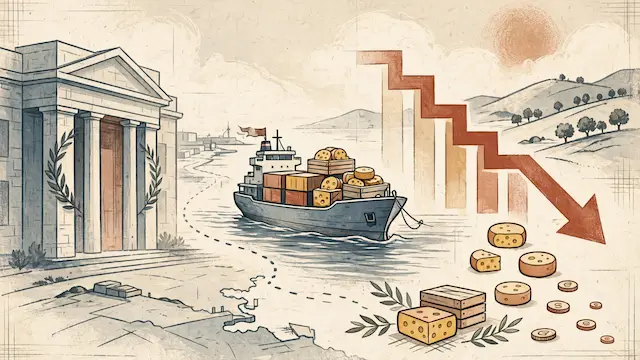
Israel's Ministry of Economy, Industry, and Trade has announced a tender for import quotas of 5,900 tons of hard cheese (gvina tzeuba) for 2027, aiming to increase competition and curb retail prices. The measure is intended to counteract rising global cheese prices. Approximately 4,070 tons of the quota will be allocated to companies offering the lowest prices, with the remainder serving as a bonus for the most attractive bids. The ministry anticipates this will incentivize importers to lower their prices. Hard cheese prices have already seen a reduction, ranging from 2.90-3.40 shekels per 100 grams in deli sections and 3-3.50 shekels in supermarkets, due to previous competition-boosting measures. In August, the ministry extended import quota systems to grocery stores and minimarkets. This initiative comes amid expectations of further price increases for essential goods and fuel in Israel starting in November, with major milling companies planning a 10-15% hike in wholesale prices, potentially affecting bread and baked goods. Egg prices have also been approved for an increase, and gasoline costs may rise significantly if tax breaks are removed. Globally, food prices rose by an average of 1.5% in September compared to the previous month, driven by grains, vegetable oils, and sugar.






