
Israel to Cut Cheese Prices Through Tariff-Free Import Quotas
Translated & summarized from Ice by baba
Israel's Ministry of Economy and Industry will import 5,900 tons of yellow cheese tariff-free by 2027 to lower consumer prices through increased competition. The initiative includes a bonus quota to incentivize importers offering the lowest prices, with ongoing monitoring to ensure savings reach consumers. This effort to combat rising living costs occurs alongside other price control measures and recent regulated price increases for eggs.
The story in 5 lines · by baba
- Israel will import 5,900 tons of yellow cheese tariff-free by 2027 to lower prices.
- The Ministry of Economy will allocate quotas to importers committing to the lowest consumer prices.
- Ongoing monitoring will ensure price reductions reach consumers, not just the supply chain.
- This initiative aims to increase competition and reduce the cost of basic goods.
- Regulated egg prices recently increased by approximately 2.1%.
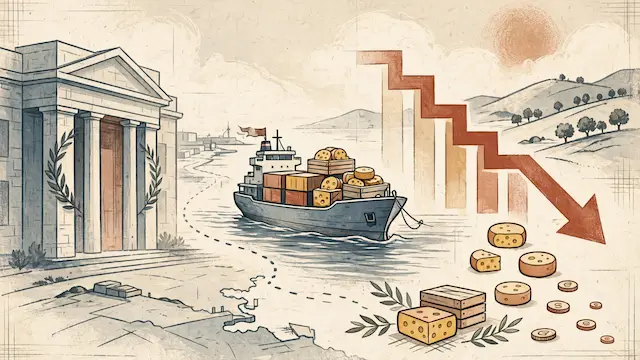
Israel's Ministry of Economy and Industry is launching a competitive process to allocate tariff-free import quotas for yellow cheese, totaling 5,900 tons by 2027. The initiative aims to increase competition and lower the cost of basic consumer goods, specifically targeting cheese prices. Approximately 4,070 tons will be allocated to importers who commit to the lowest final consumer price, both in delicatessens and on supermarket shelves. An additional "bonus quota" will be granted to those offering the lowest prices, providing more commercial flexibility even amidst rising international market prices.
This move is part of a broader strategy to combat the rising cost of living in Israel. The Ministry emphasizes that competitive processes held in recent years have successfully reduced prices by tens of percent compared to leading brands. To ensure these savings reach consumers, the Ministry will conduct ongoing monitoring of supermarket chains throughout the year.
The announcement comes as other initiatives to control prices face challenges. The "Israel's Basket" program, which offered discounted prices on 112 products at Carrefour, recently concluded and faced criticism regarding operational limitations. Separately, the Ministry of Agriculture and Food Security announced a slight increase of about 2.1% in the maximum regulated prices for eggs, adding 27 to 33 agorot per dozen, due to updated cost calculations.
In parallel, the "Social Supermarket" initiative by the Histadrut labor union is offering subsidized basic food and consumer products to further combat high living costs.
Mentioned

