Israel Faces Political Stalemate After Election
Translated & summarized from Jüdische Allgemeine by baba
Israel is in a political stalemate following an election, with Prime Minister Benjamin Netanyahu potentially forming another government with far-right and ultra-Orthodox parties. Record voter turnout did not break the deadlock, and Arab parties are now key to forming a coalition. The opposition faces criticism for excluding Arab parties, a move that could resolve the impasse. The country risks further international isolation due to unresolved issues and societal divisions.
The story in 5 lines · by baba
- Israel faces a political deadlock after an election, with Benjamin Netanyahu potentially forming another government.
- A record voter turnout did not resolve the political gridlock in Israel.
- Arab parties have become a crucial deciding factor in forming a new Israeli government.
- The opposition is criticized for ruling out coalitions with Arab parties, potentially prolonging the stalemate.
- Israel risks further international and social isolation due to its political divisions.
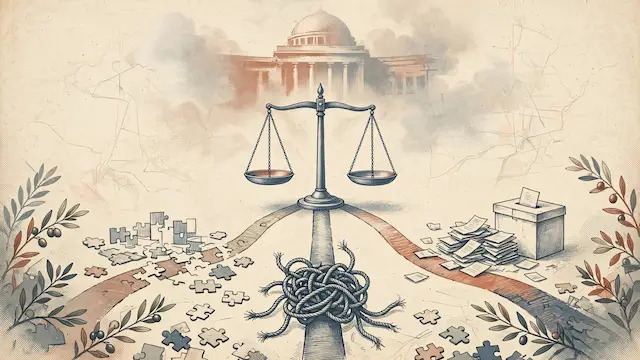
Israel is facing a political deadlock following a recent election, with the possibility of Prime Minister Benjamin Netanyahu forming another government with his far-right and ultra-Orthodox partners. Despite a record voter turnout, which highlights the importance of democracy to both Jewish and Arab citizens, the country remains politically gridlocked. This situation risks further isolating Israel internationally and socially, as trust in the nation has reached an unprecedented low.
The election results show the right-wing bloc gaining ground, but neither the governing coalition nor the opposition has secured a clear majority. Arab parties have emerged as a crucial deciding factor. However, the opposition is also criticized for self-imposed limitations, with many representatives ruling out a coalition with Arab parties, a move that could potentially break the ongoing stalemate.
While cooperation with politicians holding anti-Zionist views would be challenging due to significant differences, the reality of coexistence between Jews and Arabs in Israel is undeniable. The article argues that addressing deep-seated issues such as corruption, the extensive influence Netanyahu has wielded over nearly two decades, and the unresolved Palestinian conflict requires courage and a willingness to re-examine political red lines, rather than ignoring them.
The author, the Israel correspondent for Jüdische Allgemeine, draws a parallel with the situation in Lebanon, suggesting that societal fragmentation can lead to detrimental outcomes for Israel. The piece concludes by invoking the nation's founders, implying that Israel was built to be more than its current state of division.
The same event, reported separately by each outlet. Open a few to compare what different newsrooms emphasize — and what they leave out.
Centre 3Other 1




Not the same event — other stories that share this one’s people, places, or theme: background, reactions, and follow-ups.



