Full coverage· Politics· Updated
Israel Faces Political Stalemate Amidst Unclear Election Results
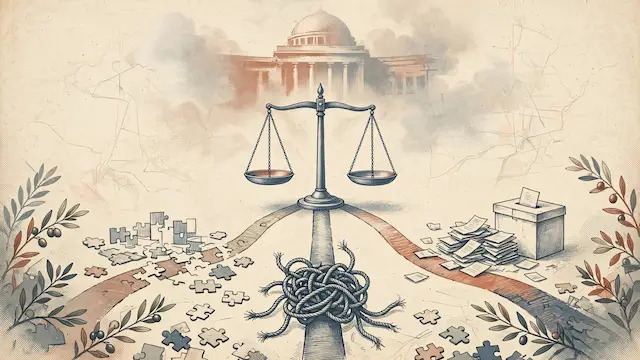
Israeli election polls point to a political stalemate, signaling a period of instability and difficulty in forming a coalition government. The "change bloc" faces hurdles with potential Arab party support due to Lieberman's opposition, while ultra-Orthodox parties demand draft evasion legislation.
2 newsrooms · 2 languages · since

Plus
What happened
- 01Israeli election polls indicate a political deadlock, leading to potential instability and difficulty forming a government.
- 02Gadi Eisenkot refuses to serve in a government led by Prime Minister Binyamin Netanyahu.
- 03Avigdor Lieberman opposes any coalition that includes Arab parties, complicating the "change bloc's" options.
- 04Ultra-Orthodox parties demand draft evasion legislation before joining any coalition.
- 05President Herzog seeks a broad unity government to prevent further elections.
- 06New elections could be held as early as March 2027 if a government is not formed.
Prime Minister Netanyahu also struggles to form a government, with Gadi Eisenkot refusing to serve under him. President Herzog aims for a broad unity government, possibly involving a rotation, but Eisenkot's stance remains a significant obstacle, potentially leading to new elections by March 2027.
The coverage
2 newsrooms on this story
Who covered it
- LeftNone
- Centre1
- RightNone
- HarediNone
- ArabNone
- Other1
How it broke
See which of the 2 newsrooms broke it, and who waited



