
Israel's Political Stalemate: Netanyahu Faces Coalition Challenges Amidst Election Uncertainty
Translated & summarized from Arab48 by baba
Israel's recent Knesset elections have resulted in a political deadlock, with no clear majority for forming a new government. Prime Minister Benjamin Netanyahu faces challenges in assembling a coalition, while opposition leaders are exploring options to replace him. Two main scenarios involve Netanyahu seeking partners from the opposition or the opposition forming a government without him, potentially leading to new elections if negotiations fail. Security concerns and the potential for renewed conflict add complexity to the situation.
The story in 5 lines · by baba
- Israeli elections have created a complex political situation with no clear path to forming a new government.
- Benjamin Netanyahu faces challenges in forming a coalition due to opposition leaders' refusal to join his government.
- Opposition leaders are exploring options to replace Netanyahu, potentially through a transitional government.
- Failure to form a stable government could lead to new elections, a prospect warned against by opposition figures.
- Security concerns and potential regional conflict add further complexity to Israel's political maneuvering.
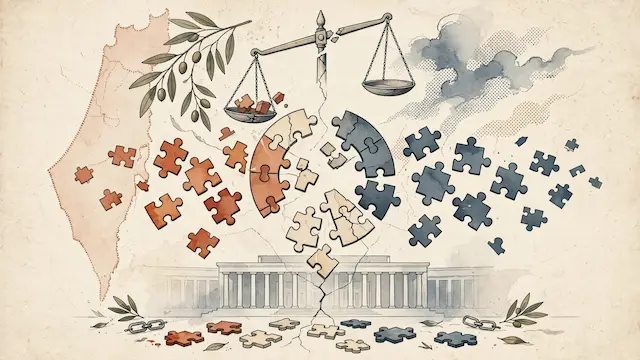
Following the recent Knesset elections, Israel finds itself in a complex political landscape with no clear path to forming a new government. While the Likud party emerged as the largest, the distribution of seats among Arab parties and the close division between the two main blocs present a significant challenge for Benjamin Netanyahu and his opponents. The core dilemma is how to assemble a parliamentary majority without compromising campaign pledges.
Political analyses suggest two primary scenarios. The first involves Netanyahu attempting to attract parties or individual lawmakers from the opposing bloc. He is leveraging the Likud's leading position and the perceived strength of the right-wing bloc to claim the mandate to form the government. However, securing a stable majority of 61 Knesset members is problematic, potentially pushing him to seek support from rivals. This could lead to a unity government or a broad coalition under Netanyahu, but key opposition leaders like Gadi Eisenkot, Naftali Bennett, and Avigdor Lieberman have publicly stated they would not join a government led by him.
Netanyahu's post-election address called for the unity of the "Jewish and Zionist majority" to form a "national and strong right-wing government," without explicitly offering coalition partnerships or concessions on his leadership. The possibility of luring individual lawmakers from the opposition is contingent on the final seat count; a significant gap between blocs would render the defection of a few members insufficient. For Netanyahu's opponents, cooperating with him, even temporarily, risks empowering him to reshape the political balance before potentially facing new elections.
The second scenario centers on replacing Netanyahu, even with an interim government. Eisenkot and his allies view the election results as a mandate for change but face the challenge of translating opposition to Netanyahu into a governing coalition. An initial proposal considered was a minority government led by Eisenkot, relying on external support from Arab parties. However, late-night updates showing a slight improvement for Netanyahu's bloc have complicated this option. Further obstacles include Lieberman's refusal to support a government dependent on Arab parties and Eisenkot's own conditions, such as a universal military service law and state recognition of Jewishness.
If forming a stable government proves impossible, parties opposing Netanyahu might pursue a limited objective: replacing him as prime minister for a transitional period, rather than agreeing on a comprehensive long-term platform. This could involve efforts to replace the current Likud Knesset Speaker, Amir Ohana, and initiating investigations into the failures of October 7, 2023. However, these steps depend on final vote counts and the ability of party leaders to maintain bloc cohesion, as opposition to Netanyahu does not guarantee agreement on an alternative leader or coalition structure.
Should both paths fail, Israel could face new elections, a prospect Eisenkot has warned against. President Yitzhak Herzog may attempt to mediate a compromise to prevent repeat elections, but his success hinges on the parties' willingness to make concessions and the emergence of a candidate capable of securing sufficient parliamentary support. Underlying these calculations are security concerns and the potential for renewed conflict with Iran, which could complicate efforts to replace Netanyahu or lead to calls for an emergency government. Ultimately, determining the next prime minister will depend not just on which party wins the most seats, but on the final vote count, the number of supporting lawmakers, and the parties' ability to maintain unity during coalition negotiations.
Mentioned




