
Israel's Government Formation Battle Intensifies Amidst Leadership Contention and Iran Tensions
Translated & summarized from Al-Shams by baba
Israel's political landscape faces a complex government formation process following recent elections, with the Likud party backing Benjamin Netanyahu despite potential parliamentary majority issues. A leadership contest is underway within the opposition bloc, primarily between Gadi Eisenkot and Naftali Bennett. Potential escalation with Iran is also influencing political and security calculations, with differing views among top security officials. The ability of parties to overcome internal disputes and form a stable coalition remains uncertain, with the possibility of new elections looming.
The story in 6 lines · by baba
- Benjamin Netanyahu's Likud party seeks to task him with forming a government, even without a clear majority.
- Gadi Eisenkot and Naftali Bennett are vying for leadership within the bloc opposing Netanyahu.
- Potential confrontation with Iran is a significant factor influencing Israeli political and security calculations.
- The ability to form a stable coalition depends on parties overcoming internal disputes and reaching agreements.
- There are efforts to prevent vote wastage, particularly concerning smaller lists like 'Ahi'.
- Internal disagreements exist among Israeli security chiefs regarding potential actions against Iran.
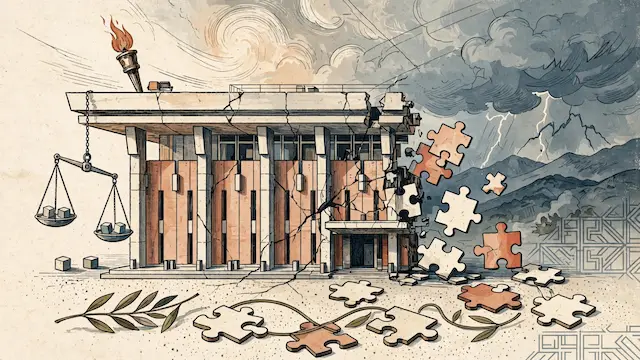
The political struggle in Israel is extending beyond vote counting, with scenarios emerging for government formation difficulties and a contest for leadership within the camp opposing Benjamin Netanyahu. Potential confrontations with Iran are also casting a shadow over coalition calculations. The results of the Israeli elections do not appear to signal a swift end to political conflict. The Likud party is preparing to request that Benjamin Netanyahu be tasked with forming the government, even if he lacks a clear parliamentary majority. Meanwhile, disagreements persist within the anti-Netanyahu bloc regarding the identity of the candidate who will lead efforts to form an alternative coalition.
Channel 13 reported that if Netanyahu falters in forming a government, he might attempt to obstruct a rival coalition's formation, leveraging the differing stances of opposing parties. These efforts could include preventing his opponents from controlling the Knesset, potentially allowing them to change its speaker, Amir Ohana, and to work on repealing legislation passed by the current government.
Within the camp opposing Netanyahu, Gadi Eisenkot maintains that his list's lead in votes grants him priority in forming a government. When asked about the next prime minister, he responded, "I am," while acknowledging leadership disputes and stating he would not impede an agreement. Former Prime Minister Naftali Bennett, leading the "Yachad" list, is seeking to improve his poll standing and close the gap with Eisenkot to bolster his claim to lead the next government. This competition could also influence party calculations if coalition formation fails and new elections are necessary.
Yair Golan, leader of the Democratic Party, criticized Eisenkot's campaign to strengthen his list's position, calling it a "dangerous lie." A Channel 13 recording revealed the party's director-general admitting to direct campaigns against Eisenkot to garner more votes.
Channel 12 analyzed questions about whether topping the parliamentary scene guarantees a mandate to form a government or success in doing so, noting that four of the last five candidates initially tasked failed. The analysis recalled Bennett's past calls for support when leading polls, emphasizing that the decisive factor is not necessarily the largest list but the candidate's ability to assemble a parliamentary majority.
Political maneuvering is also underway to prevent vote wastage. Channel 12 reported a developing understanding between Netanyahu and Rabbi Abirgel regarding the potential withdrawal of the "Ahi" list, with Likud's Minister of Education, Yoav Kisch, involved in these efforts. The Likud aims to avoid losing votes, even if only around 15,000, due to the sensitivity of electoral calculations and their impact on seat distribution and coalition prospects.
Beyond internal party disputes, the possibility of renewed confrontation with Iran is a significant factor in Israeli political and security calculations. Channel 12 analysis indicated Netanyahu focused on security and stability promises in the 2022 elections, but now speaks of a potential third confrontation with Iran, following incidents in June 2025 and February 2026. The US stance, particularly President Donald Trump's position on a new attack before the US midterm elections, could influence the timing of any potential confrontation. Channel 12 also noted reservations from Chief of Staff Eyal Zamir regarding preparatory steps that could lead to an uncalculated confrontation, contrasting with the positions of the heads of Mossad and Shin Bet. This does not necessarily mean Zamir opposes attacking Iran, but rather concerns about the repercussions of steps that could lead to uncalculated escalation.
Ultimately, the Israeli election process will extend beyond seat distribution to a battle over recommending a candidate for the mandate, their ability to assemble a parliamentary majority, and control of the Knesset. Amidst the competition for leadership in the anti-Netanyahu camp, efforts to prevent vote loss, and security developments related to Iran, the possibility of forming a stable government hinges on parties overcoming their differences and reaching viable coalition agreements, or the scenario may revert to new elections.
Mentioned



