
Cyber Attack Surge Ahead of Israeli Elections, Report Warns
Translated & summarized from Mako by baba
Cybersecurity firm Check Point reported a significant rise in cyberattacks targeting Israel ahead of the 2026 elections, including malicious websites and phishing attempts. Organizations experienced a 55% increase in weekly attacks, with government and energy sectors seeing higher jumps. Hacking groups are disseminating stolen data and planning disruptions, while AI is enabling more sophisticated attacks. Police have removed suspicious social media accounts involved in influence operations, and experts advise heightened vigilance for both organizations and the public.
The story in 6 lines · by baba
- Cyberattacks targeting Israel have surged by 55% weekly, with election-related malicious websites increasing significantly.
- Hacking groups are disseminating stolen data of Israeli voters, soldiers, and officials, linking it to the upcoming elections.
- Attackers plan to disrupt key Israeli government and political party websites on election day using DDoS attacks.
- Artificial intelligence is enabling attackers to conduct more complex and autonomous cyber operations at unprecedented scale.
- Police have dismantled a network of suspicious social media accounts attempting to influence the Israeli public.
- Experts advise organizations to bolster defenses and the public to verify information solely through official election channels.
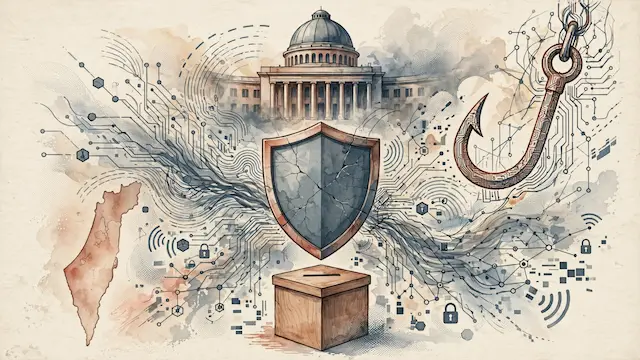
Cybersecurity firm Check Point has reported a significant increase in cyberattacks targeting Israel in the lead-up to the 2026 elections. The company's findings indicate a surge in malicious websites, phishing attempts, and influence networks aimed at disrupting the democratic process and sowing public distrust. Between September and October, over 1,200 new websites related to Israeli elections were registered, with one in every 47 flagged as suspicious. Attacks against Israel have risen, with a particular focus on public officials and election-related materials. Attack groups are reportedly preparing to disrupt websites on election day.
Check Point's research revealed that in the first weeks of October, Israeli organizations experienced an average of approximately 2,700 weekly cyberattacks, a 55% increase from the previous year. The government sector saw a 82% rise to about 2,300 attacks per week, while the energy and infrastructure sector experienced the largest jump of 107%, with around 3,900 weekly attacks. Since the beginning of October, 87 confirmed cyberattacks against Israel have been documented, primarily aimed at taking down or defacing websites. Security experts emphasize that the psychological impact of these attacks is intended to undermine public confidence in the democratic process, noting that the voting and counting procedures themselves, conducted manually, are not affected.
Furthermore, the report highlights a rise in public activity by anti-Israeli and Iranian hacking groups, who are disseminating materials allegedly obtained through cyberattacks, including videos, images, and personal data of public figures and IDF camps. The Iranian group Handala has reportedly intensified its publications, directly linking them to the Israeli elections. Analysis attributes 53% of these incidents to pro-Palestinian hacktivists, 18% to Indonesian hacktivists, and 10% to criminal elements. Discussions on the dark web regarding Israel and the elections have increased by 110% since September, with groups planning Distributed Denial of Service (DDoS) attacks on election day targeting prominent Israeli government websites, including the Prime Minister's Office, the Knesset, and the Ministry of Foreign Affairs, as well as political party sites.
Compounding these threats, the sale of a database containing approximately 6.5 million Israeli voter records, originally leaked in February 2020, has resurfaced on hacker forums. Additionally, details of 38,000 soldiers and police officers were presented as a new leak, despite having been previously disclosed. This information could be exploited for fraud and voter deception through fake messages. Experts also warn of a significant technological escalation driven by artificial intelligence, enabling attackers to conduct large-scale and complex operations autonomously, identifying vulnerabilities, gathering intelligence, and exploiting entry points at machine speed. This poses a challenge to human-paced defense systems.
In response, Check Point recommends organizations ensure their defenses against availability disruption attacks are active, implement multi-factor authentication, change exposed passwords, and monitor for and remove impersonating websites and accounts. The police have also taken action, dismantling a network of suspicious accounts on X (formerly Twitter) suspected of attempting to unduly influence the public ahead of the elections. For the public, the recommendation is to verify information solely through official channels, avoid sharing personal details via unsolicited links, and scrutinize information before sharing it. Sivan Dror, Director of Research in Exposure Management at Check Point, stressed the critical nature of this period and urged organizations to protect their official sites and accounts while the public should rely on official election channels and verify information.
Mentioned
The same event, reported separately by each outlet. Open a few to compare what different newsrooms emphasize — and what they leave out.
Centre 2Other 5







Not the same event — other stories that share this one’s people, places, or theme: background, reactions, and follow-ups.




